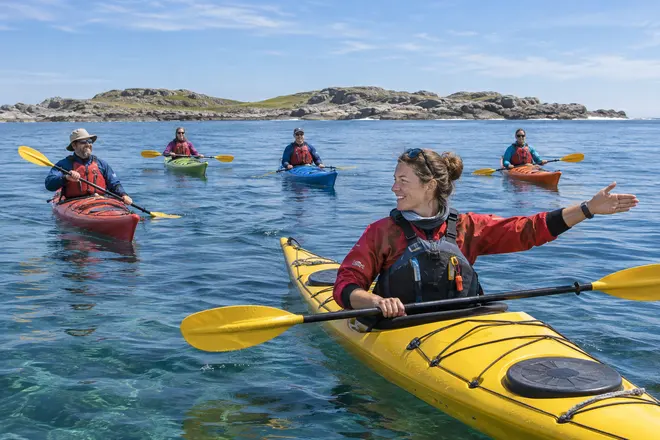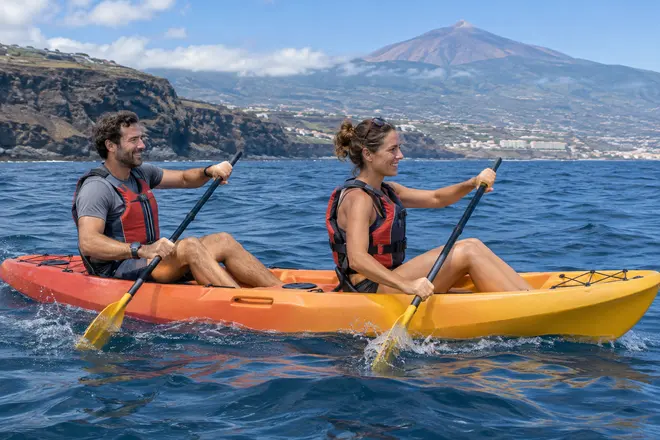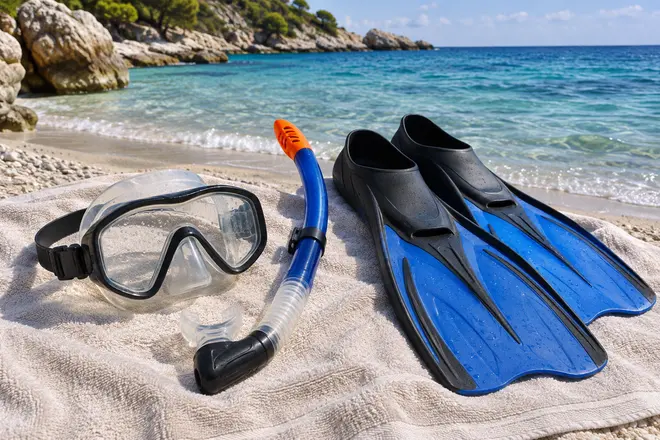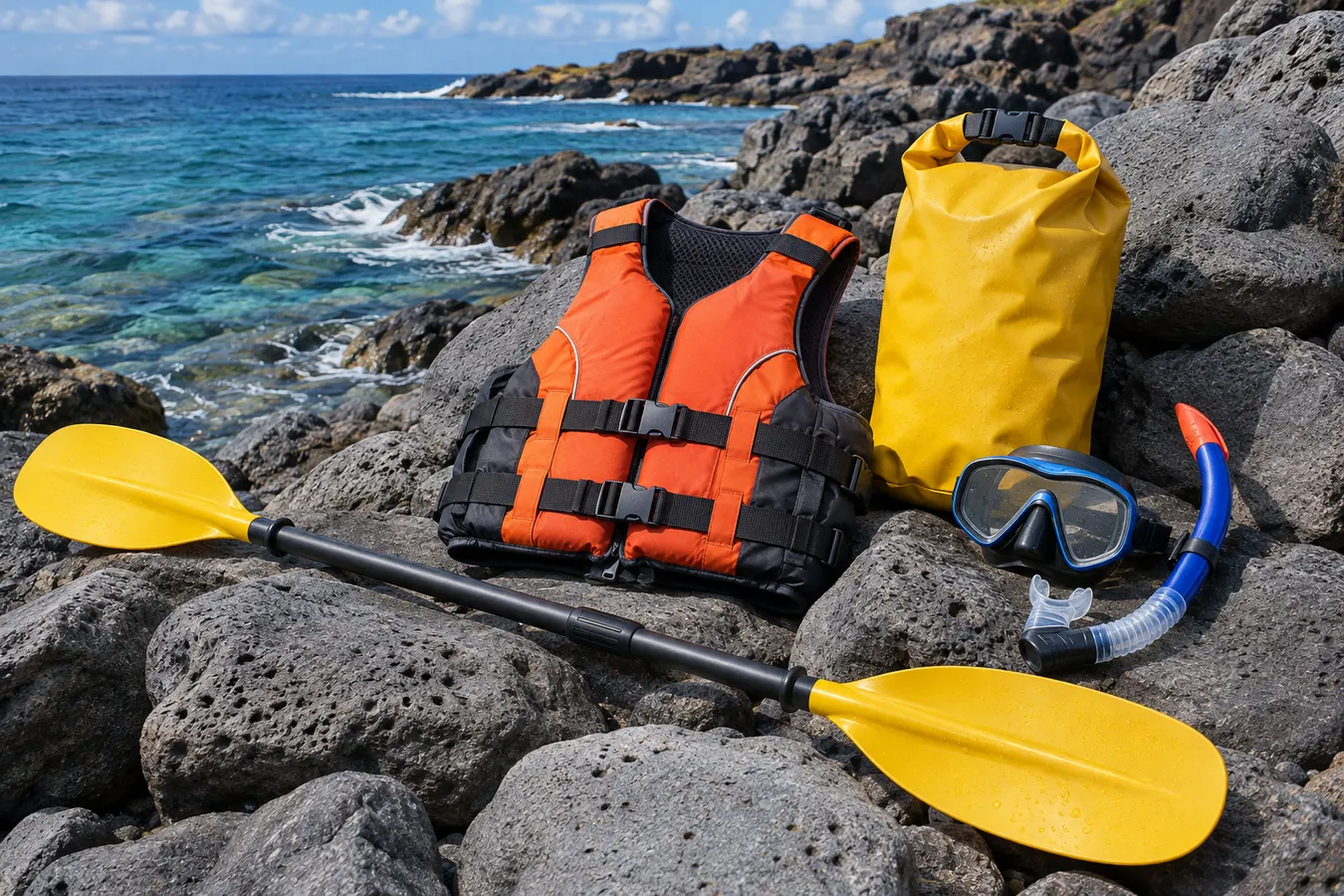
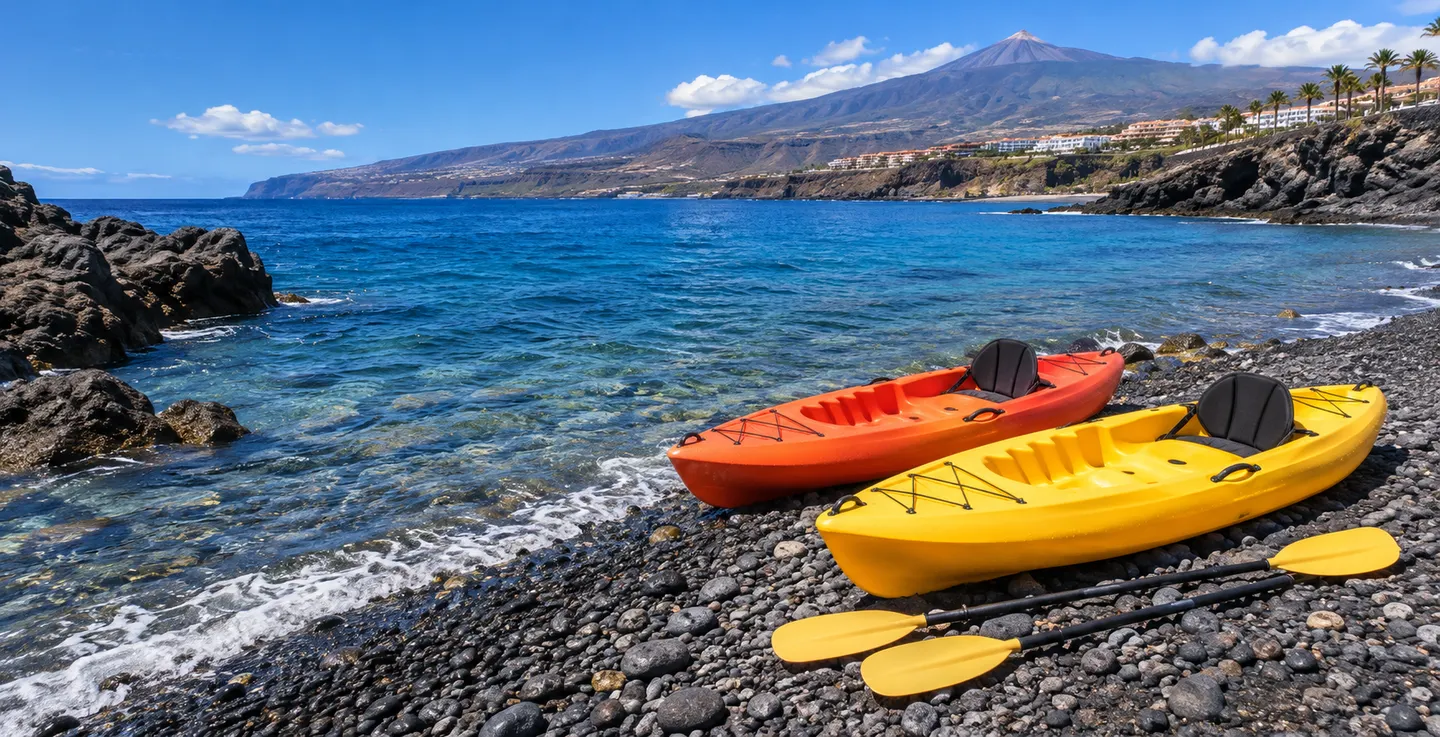
A paddle resting beside a kayak presents a simple picture: it seems the only things required to start navigating are those two items. Sea kayaking equipment, however, includes things with very different functions. Flotation equipment helps keep the body buoyant, a dry bag protects certain belongings and thermal clothing helps address the heat loss that can occur when someone gets wet. None of those items performs the function of the others.
In Tenerife, you can go from walking in brilliant sunshine to an activity exposing your body to the wind over the Atlantic. Preparation means choosing equipment suitable for that second situation and for potential incidents, not simply the air temperature forecast on the beach. This overview can help you understand what should be discussed with the person leading the outing or, for trained paddlers, considered when creating a specific navigation plan.
An appropriate boat, not just an attractive one
Kayaks differ considerably in their dimensions, hull shape and load-carrying capacity. Recreational outings frequently use open models, where the occupant sits on a moulded surface. Enclosed touring kayaks tend to have different characteristics and may use particular equipment such as a spraydeck. Each type requires familiarisation and appropriate skills.
A boat has limitations relating to the weight of its occupants and equipment as well as its intended use. The stability experienced when first getting onto a kayak in calm conditions does not in itself represent its behaviour in waves. It is therefore important to understand the model's characteristics and have professional advice about its suitability for the activity.
Before using borrowed equipment, pay attention to ergonomics. If adjustable supports are provided, they should suit your sitting position. If there is a system covering the cockpit opening, you need to understand it and have received appropriate training. Do not use equipment which can make getting out of the boat more difficult without the knowledge and practice to manage it. Equipment is not something to improvise at the last minute.
Why a paddle needs to suit its user
A kayak paddle has a blade at either end. Its length, blade shape, weight and shaft geometry affect the way it is handled and therefore the comfort of a session. Something perfectly suited to another person may be unsuitable for your height or the width of the boat you will be using.
At the beginning of a lesson there should be time to establish hand position and recognise the working faces of the paddle blades. It is normal to find that an unfamiliar paddle changes your coordination. Gripping excessively tightly to compensate creates tension, particularly when making a lot of consecutive movements. An instructor can adjust the equipment and correct your posture before it becomes habit.
Related reading: Guided or independent kayaking in Tenerife: choosing for your experience.
On sea journeys, the possibility of losing or damaging a paddle is one of the circumstances to prepare for. Addressing that risk is not simply a matter of bringing another paddle without ensuring that it is accessible and appropriately carried. Spare equipment and securing systems need to form part of a safety plan appropriate to the kind of navigation and the group's abilities.
Personal flotation: from beginning to end
Flotation equipment must be appropriate to the person wearing it and its circumstances of use. Lifejackets and buoyancy aids do not all have the same design or performance, and some are intended for particular conditions. It is essential to understand these characteristics with help from someone competent, in addition to checking the fit according to the manufacturer's information.
If an activity provides flotation equipment, do not hesitate to say you need another size. It should fit properly, allow the movements required for paddling and remain in the position in which it is designed to be worn. It is not an accessory that makes sense to remove while resting on the water. Protection is precisely what you need when something unexpected happens and you have no time to prepare.
Being a strong swimmer is no reason to do without it. At sea there may be fatigue, waves, cold or an injury that makes a skill which seems easy under other circumstances difficult to use. Choosing a device and learning how it works are part of preparation, not improvisation once you are in the water.
Clothing designed to get wet
When choosing clothing, remember that a session can involve splashes and a lengthy period of exposure. Water cools the body, and wind can increase the sensation of cold. Not every T-shirt or jacket that protects you from the wind on a walk serves the same purpose on the sea. Thermal equipment needs to match the water conditions and possibility of immersion, particularly for more exposed activities.
Sun protection is worth considering as well. A suitable long-sleeved top may be more practical than relying exclusively on sun creams in certain situations. Clothing should be comfortable and should not restrict movement. Headwear and eye protection must be chosen with the wind in mind, and so they will not get lost or interfere with the activity. If the person leading the session recommends leaving certain objects behind, follow that advice.
Appropriate water sports footwear, with a sole that protects the foot and a secure fit, can be useful at access points. This is not the same as wearing flip-flops that can easily come off. A change of dry clothing helps you quickly get away from the sensation of cold and damp once ashore again.
Water, belongings and dry bags
Deciding what to bring deserves more thought than it might initially seem. There are constraints on space and load in a kayak. Putting lots of objects inside one bag does not guarantee that your equipment is well organised: you might need something at the bottom or have placed equipment where it gets in the way. For a guided outing, agree with the person in charge where items will be carried.
Dry bags have closures designed to exclude water when used correctly and within the specified conditions of use. Check their condition and understand how they should be closed. Do not assume all covers protect against prolonged immersion, or that an ordinary bag will prevent water reaching electronic devices. For important items such as keys or communication equipment, the choice and placement of protective systems deserves particular attention.
Bring sufficient drinking water for the planned activity. Exercise in a sunny environment can contribute to dehydration even if you do not feel very hot because splashes of water cool you down. Ask how to reach drinking water at an appropriate moment without interfering with the control of the boat.
Communication and equipment for dealing with incidents
Equipment for someone properly prepared to navigate on the sea might include, depending on the circumstances, suitable means of communication, signalling devices, navigation aids and equipment intended for recoveries, towing, pumping, repairs and first aid. Their functions, selection and safe use require training. No shopping list, however extensive, can substitute for that expertise. The necessary equipment depends on the specific conditions and plan, not on an individual's enthusiasm for accessories.
There must be a way to call for help that is accessible and adequately protected from water. Communication forms part of the plan shared with someone ashore for independent outings. The coverage and operational limitations of individual devices must also be considered; relying on an ordinary internet connection alone is insufficient.
Well chosen equipment can be recognised by the function it performs and by the fact that you know how to use it. For a first outing in Tenerife, it is better to ask about and familiarise yourself with the fundamentals under supervision than fill a bag with unfamiliar gear. As you progress towards more complex activities, develop your skills, preparation and equipment at the same pace.
Explore next: Kayaking tours in Tenerife.