When organising a holiday in Tenerife, it is common to find activities described in similar terms: kayak hire, guided trip, introduction and touring. To people with little experience they may sound like versions of the same service. In fact, they represent different levels of independence and responsibility. Before choosing, understand what is expected of you once the comfort of the shore has disappeared.
The question goes beyond comparing prices or deciding whether you would prefer to spend the time in a group. A day of sea kayaking involves managing a route, changing conditions, navigation, equipment and any incident that may arise. The less experience you have in those areas, the more sense it makes to learn under supervision in surroundings selected by specialists.
How a lesson differs from a guided excursion
An introductory lesson aims to develop some basic skills. It can include an explanation on land, exercises to discover a functional paddling posture and practice under observation. Progress is made when the group understands how the boat moves and responds to simple instructions. Distance is generally a secondary concern because learning is not a competition to move as far as possible.
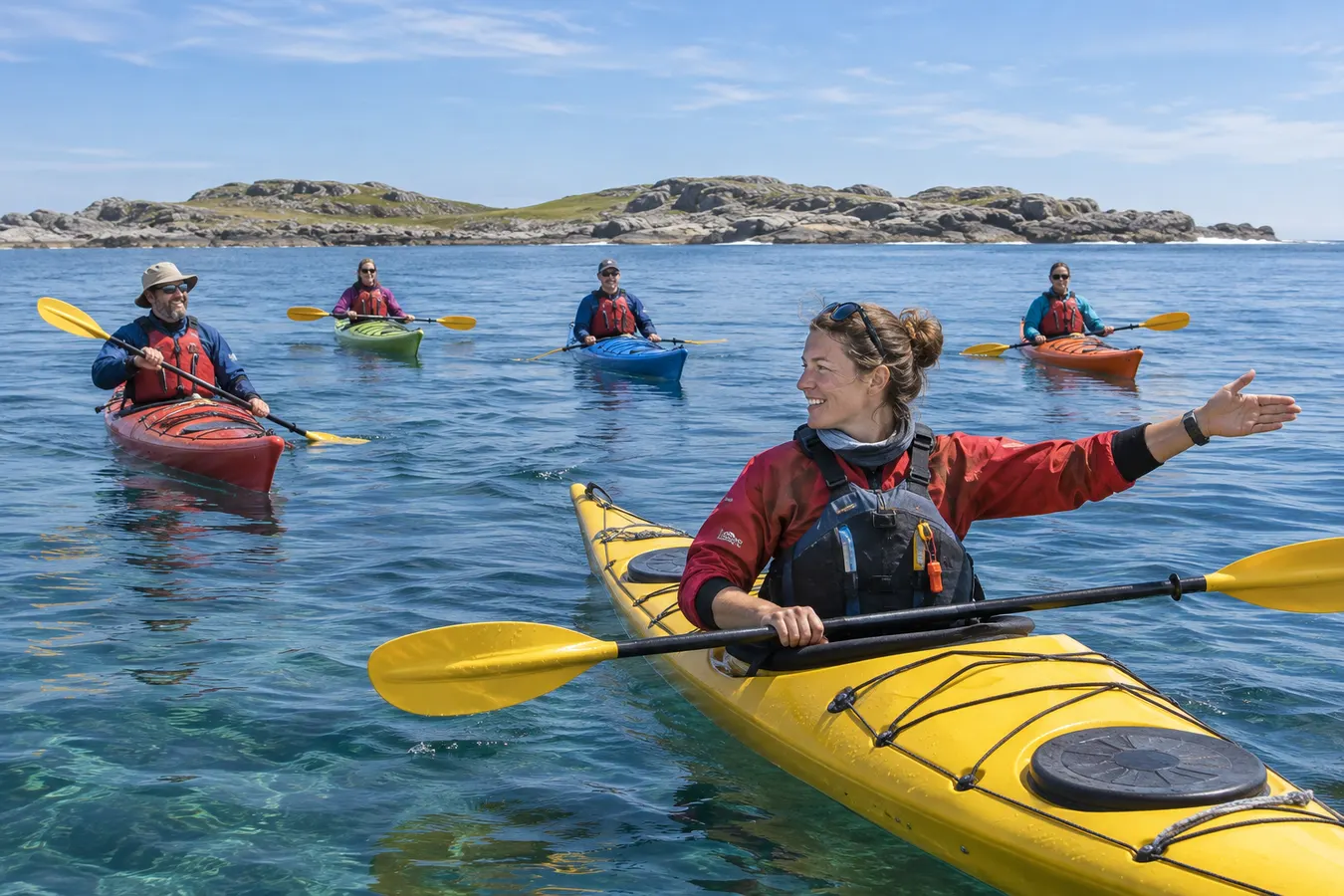
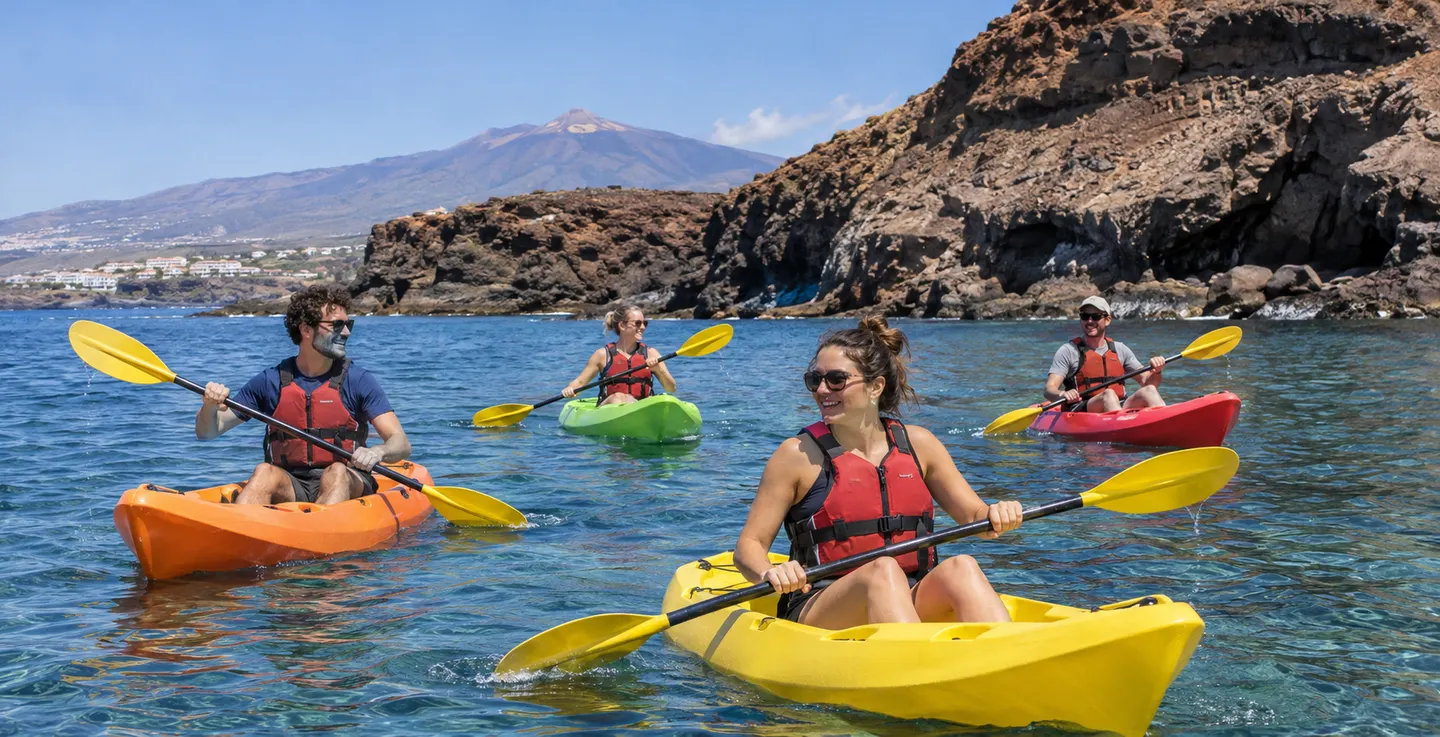
A guided excursion is usually organised around a route and an interpretation of the location. The person leading the activity should adapt the plan to the situation and the group's ability, but needs participants to meet certain requirements. There may be a short introduction to handling the kayak without the day amounting to a full navigation course. If you intend to acquire independent skills in future, ask what learning components are actually included.
An outing around Los Gigantes, for example, may appeal to someone wanting to look at the landscape. That is not automatically a good first lesson: much of that coastline has limited landing opportunities and demands attention to conservation measures. A small session in a suitable location with time to repeat exercises may do more for your confidence than a route through spectacular scenery.
The role of the person guiding a group
Do not think of a guide simply as someone who knows the way. In a water activity the job involves assessing conditions, organising participants, communicating instructions clearly and deciding whether the plan remains appropriate. Maintaining a pace suitable for the slowest participant is an important part of that task.
To receive appropriate instruction, participants must provide useful information. Explain if you have tried kayaking before, whether you can swim in the sea, whether something limits your physical exertion or whether a particular situation concerns you. You do not have to pretend to have experience you lack in order to enjoy the day. It only makes proposing an appropriate activity more difficult.
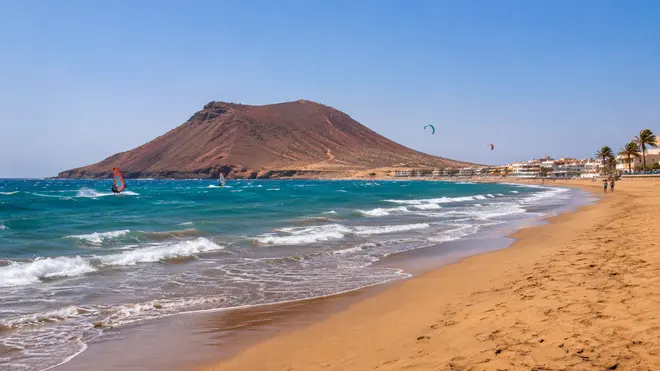
Related reading: Kayaking in El Médano: choosing the right day on Tenerife's windy coast.
Before arranging an outing, establish the qualifications of the person in charge, what equipment is provided, the planned group size and how a situation where someone cannot continue is handled. Ask what happens when conditions do not allow the original proposal to go ahead. The possibility of an outing being cancelled is a normal feature of an activity on the ocean, not a shortcoming.
Hiring equipment does not mean receiving training
Boat hire can be useful to someone with the appropriate skills who needs equipment in the place they are visiting. It does not automatically make an independent activity safe for anyone who can swim. Receiving equipment cannot replace the ability to use it properly or the preparation needed to deal with an incident.
A visitor may have paddled for years on reservoirs without having enough experience for a marine setting. Waves arriving on land, a wind blowing in an unfavourable direction, movements of other boats and tides present important differences from many inland locations. Moreover, knowing a recovery technique in theory is different from practising and becoming proficient at it in relevant conditions.
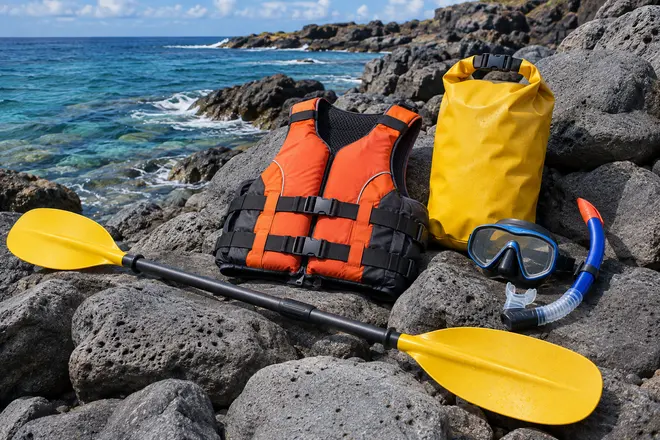
When hiring equipment, establish precisely what service you are receiving: a kayak without further assistance or supervision in a defined area, which additional equipment is supplied and what restrictions apply. Check that the equipment actually suits your size and the kind of navigation intended. If you are not prepared to evaluate all those factors, training and supervision are the appropriate choices.
What independent planning requires
Independence in a kayak involves preparing an entire trip before undertaking it. A competent person must be able to evaluate marine forecasts and their limitations, understand features of the area, plan the route and possible refuges, choose equipment, navigate while respecting restrictions and adjust the outing to the group's abilities. They also need sufficient practice to deal with adverse situations without relying on a telephone working or someone being nearby.
Tenerife introduces several local considerations. There are working ports close to bathing areas, rocky coastlines with few opportunities to land and protected marine areas. On some coastlines the influence of wind changes according to the position and orientation of the terrain. The fact that a town is a visitor resort tells you little about the difficulty of navigating off its shores.
Preparation involves sharing a clear plan with someone responsible ashore, including the intended route and times, carrying suitable means of summoning help and having the appropriate safety equipment. A contingency plan requires that the whole group understands what to do and has realistic alternatives. If one of the participants is not sufficiently prepared for the conditions, another person's experience does not in itself remove that difficulty.
How each option fits with your holiday
A visitor arriving for four days who has never used a double-bladed paddle may get more from a short beginner session than from trying to hire equipment independently. Someone looking for a scenic experience can choose a guided activity that accepts their level, provided it goes ahead in suitable conditions. A person who wants to improve their technique should look for a lesson with explicit learning objectives.
Paddlers with sufficient training may want to devote their holiday to discovering new coastlines. Obtaining good local information and planning alternatives is important for them, rather than automatically replicating a route they would attempt on another island. Seeking the judgement of local specialists is not a loss of independence; it is part of exercising it responsibly.
Think about the pace of the people travelling with you as well. A family or group of friends may have different preferences. If one person is keen to learn navigation and the others simply wish to try kayaking once, separate sessions might make more sense. The keen learner can take time to receive corrections, and the others can enjoy something that suits their abilities.
The right choice changes as your skill changes
The transition from beginner to independent paddler does not happen by taking a certain number of excursions. It depends on the quality and variety of practice, technical learning, the ability to evaluate the surroundings and experience under supervision. It takes time to recognise both what you are able to do and what you are not yet ready for.
A rewarding relationship with kayaking leaves room for days with no intention of covering a distance and others specifically aimed at extending your knowledge. After a first guided outing, you may discover that what you enjoyed most was not the place itself but the sensation of controlling the boat properly over a short stretch. That discovery is better addressed with future technical instruction than by a need to hire equipment the following day.
Choosing supervision does not diminish the interest of exploring Tenerife from the water. It lets you concentrate on the experience and gradually learn to interpret what is around you. Independent paddling, when accompanied by sufficient preparation, offers different possibilities. Each has its time and place; the important thing is that the choice genuinely matches your abilities and the conditions of the coast.
Explore next: Kayaking tours in Tenerife.