Can you fit a kayaking trip and a walk on Teide into a three-day visit? Yes, as long as you accept that there will be plenty left to discover. Tenerife is too large and too mountainous for a short break to cover its entire coastline and all its upland landscapes. A brief visit works better when each day is assigned to one area and there is a little breathing room between activities. This itinerary is designed for a group that wants to move about, understand the landscape and enjoy the closeness of the ocean without turning the holiday into a race.
The plan assumes three full days. If you arrive in the afternoon or depart on a flight around midday, you would be better off leaving out one of the suggestions than trying to compress them all. Each day has a main objective and an alternative you can adapt to the weather, road conditions and energy levels of your group.
Choosing a base for the trip
In the south, Los Cristianos and Costa Adeje have a wide choice of accommodation, shops and places to eat. The proximity of departure points for trips on the water means more of your time can go towards the experience rather than travelling. If the weather does not lend itself to a water activity, there are also plenty of walks beside the ocean. Accommodation in Los Gigantes has a more enclosed feel and might appeal to those who want to spend most of their break in the west.
This itinerary suggests staying in one place for all three nights. With so little time available, the tasks of packing a suitcase, handing over keys and finding somewhere for luggage make a trip more complicated than it needs to be. For the day at Teide, look at transport options well in advance. If relying on buses, remember that the frequency of the service climbing to the national park is very different from that of services linking the main resorts.
Day 1. Los Cristianos and a first kayak outing
Use the first morning to acquaint yourself with the Atlantic. Los Cristianos developed in a harbour setting and retains a visible relationship with the sea. The town beach, the ferry terminal and the promenade leading towards Las Vistas allow you to establish your bearings quite quickly. Not every stretch of water you can see from the seafront is suitable for swimming or leisure craft. Harbour entrances and navigational channels must stay clear.
A guided introductory kayaking session can occupy the main part of your morning. Before taking part, check the meeting point, physical requirements, equipment supplied and cancellation conditions. If you have never held a paddle before, allow time for the introductory briefing. Bring clothes that can get wet and a dry change, rather than planning a visit afterwards which would involve rushing halfway across the island.
From the water, your perspective on the coast changes completely. You can make out the lava flows, the shape of the hillsides and the space the town occupies beside the ocean. If animals appear, it is important not to chase them or try to close the distance with your kayak to get a photograph. Sightings are spontaneous; a session without animals is still valuable as an experience of paddling.
Related reading: When to visit Tenerife for outdoor activities.
After lunch, it is pleasant to walk towards Las Vistas and continue along the seafront as far as you feel like going. An out-and-back walk makes it straightforward to judge your energy. The afternoon offers time for a rest, exploring the streets in the older part of town and finding something to eat without getting in a car.
If the sea conditions prevent your outing
Rather than trying to find a different launching point yourself, spend the morning walking along the coast and postpone the kayak trip until the third day if conditions are favourable. Keeping that possibility available is one reason to place your water activity at the beginning of the break.
Day 2. A mountain landscape at altitude
The contrast with the previous day is enormous. Leave the shoreline and climb towards Teide National Park. One option from the south is to approach through Vilaflor, a mountain settlement which offers a different perspective on the island. The winding road gains height, crossing landscapes whose vegetation and appearance gradually change. Check the status of access roads and drive with care if the weather is unfavourable.
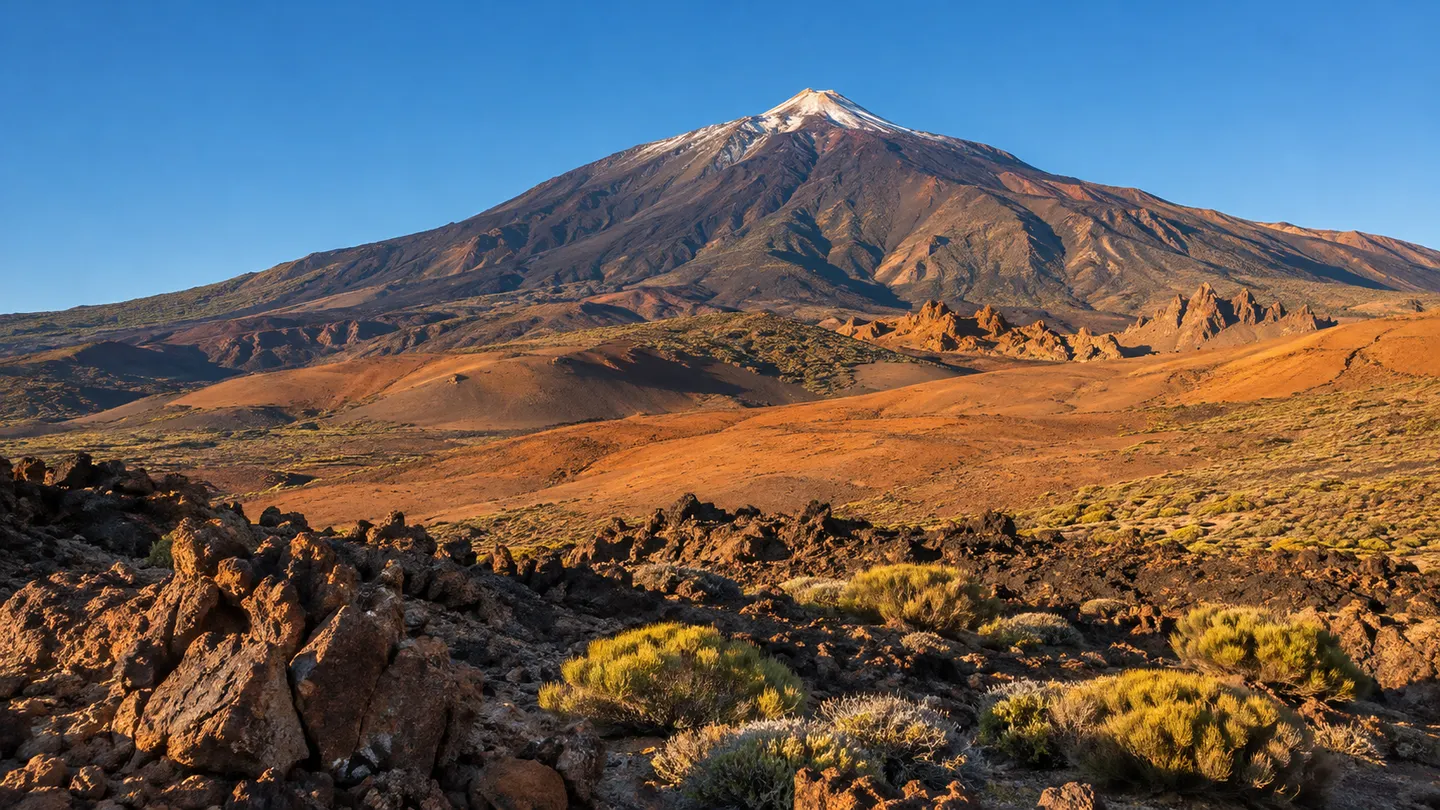
Las Cañadas is dominated by terrain of volcanic origin. The Roques de García are a useful landmark from which to get your bearings and appreciate the scale of the surroundings. Depending on the condition of the paths, your fitness and the time available, choose a short walk or stop at designated places from which to admire the rock formations. High altitude can make a seemingly easy outing more tiring than expected. This is not a day for an improvised ascent to the summit.
Your backpack should contain water, some food, sun protection, warm clothes and a windproof layer. Even when it is hot in the south, temperatures may be considerably lower in the national park. Visitors must not leave designated trails to take shortcuts or collect volcanic rock. Certain paths may require authorisation, close or have specific conditions of use, depending on the date and circumstances. Establish what those requirements are before setting off.
On the way down, a stop in Vilaflor or another settlement along your route offers an opportunity to relax before returning to the shore. Leave the end of the afternoon free, especially if your driver has been navigating bends for much of the day.
If access to the national park is closed
One alternative is to spend the day visiting the old centre of Adeje and walking one of the publicly accessible stretches of the coast. Ravine walks have restrictions of their own and should not be assumed to be open whenever bad weather appears on the summit. The value of a flexible plan lies in avoiding another long journey and being able to choose what to do on the day.
Day 3. The western shoreline
For the end of the holiday, it is rewarding to see the island from an area with a clearly defined character. Los Gigantes is distinguished by almost vertical rock faces visible from several points along the coast. The town and nearby Puerto de Santiago offer opportunities to appreciate them without having to go out onto the ocean. Short circuits around streets and promenade areas make this a day which is easily adapted to a group that is tired after the Teide excursion.
If the water activity was not possible on your first day, you might have a chance to reschedule it with a professional who knows the local conditions. The surroundings of the cliffs are not comparable with a sheltered beach. There are sections with few places to land and the conditions can become difficult. A visitor without the necessary experience should not improvise a trip along the outside of the bay.
On calm days and with appropriate precautions, looking beneath the surface is also an enjoyable way to explore places where swimming is permitted. If visibility is poor or there is no suitable point of access, the walk is equally interesting. Towards the end of the afternoon, the light on the rocky slopes is well worth leaving a little time to appreciate before you set off back to your accommodation.
Small details that help a short break run smoothly
With three days available, delays make more of a difference than on a longer holiday. It is practical to prepare the bag of dry clothes the evening before, charge your phone and have transport times written down. On your departure day, do not calculate the return journey to the airport to the minute. Traffic on major roads may be slow and extra time is worth building into your plans.
There is no obligation to see every point mentioned here. A morning on the ocean, a day among volcanic rocks and a walk beside the towering cliffs offer plenty of variety for a first visit. The rest of the island will still be there for a second break, perhaps a longer holiday with a base in the north and several days dedicated to walking.
Explore next: Where to stay in Tenerife for active holidays.