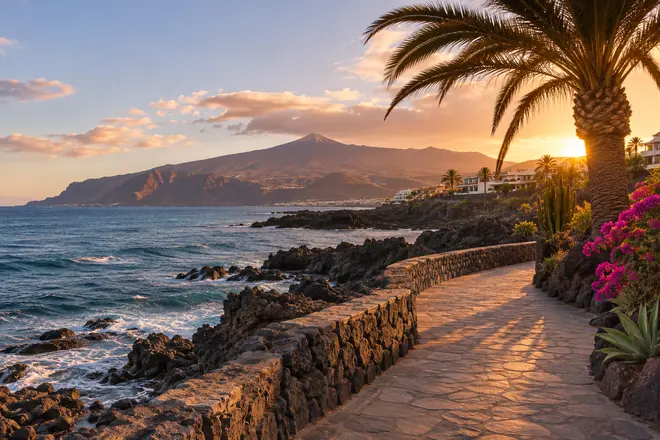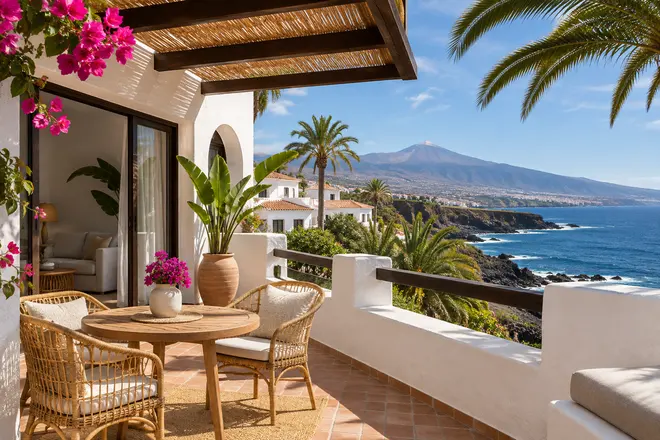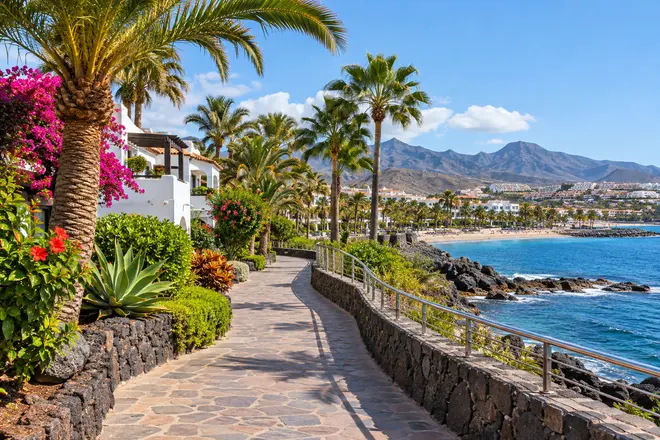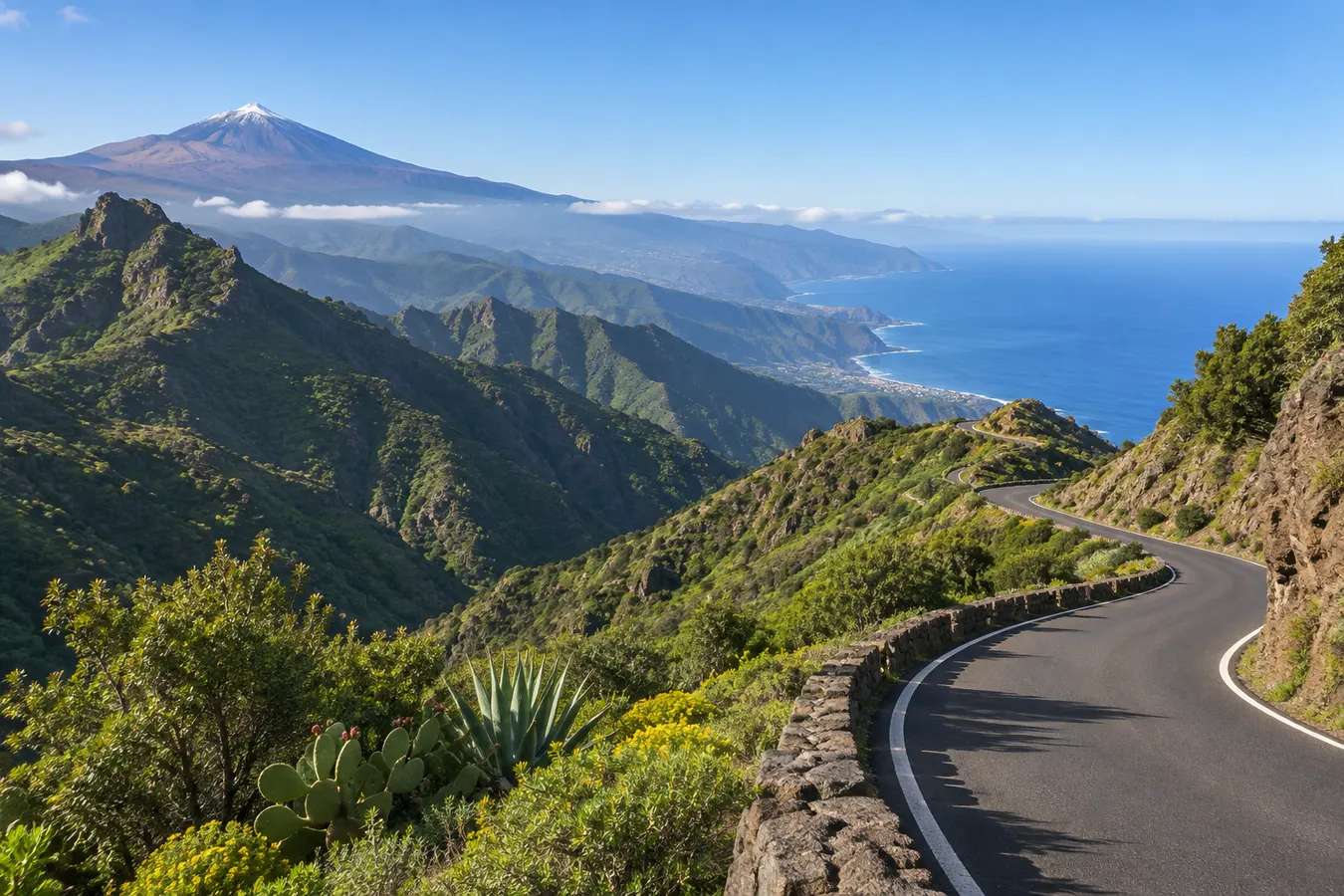
Seven days allow you to alternate between Tenerife's two great settings: the Atlantic and the volcanic terrain which rises out of it. There is also time to look for somewhere to stay in two different areas and understand the real distances between places that appear close together on a map. This week starts on the southern coast and finishes in the north. It includes one kayaking activity, an opportunity to snorkel, a day in the mountains and several walks whose length can be adapted to the travellers' experience. It does not assume that every member of the group wants to undertake strenuous exercise every day.
If you would rather not change accommodation, you could do the trip using a single base. In that case, either remove one of the stages or anticipate longer journeys. This route is easy to understand with a vehicle, although many of the towns are accessible by bus. Each day must be planned around whatever restrictions are in place at the time.
Day 1. Getting to know the southern shoreline
Starting on the coast has the advantage of not demanding too much effort after your flight. In Los Cristianos, walk along the promenade, locate the entrances to the various beaches and get a sense of the town's maritime atmosphere. The next beach, Las Vistas, has an avenue which allows you to continue towards Playa de las Américas without following a complicated route. You can turn back whenever you like.
If you are staying in Costa Adeje, a comparable option would be to walk along the coast between the Puerto Colón area and the beaches of Fañabé and El Duque. During the first afternoon it is worth reviewing the marine forecast for the following days, deciding what clothes you will need for kayaking and locating the departure point before you have to attend an activity early in the morning.
Day 2. Learning to see the island from a kayak
The coast takes on an entirely different scale when you are sitting close to the water. Visitors with no previous experience can dedicate the morning to a guided activity that begins with how to handle a paddle, wear a buoyancy aid and use the basic manoeuvres. It is better to check the prerequisites than to assume that every outing is advisable simply because the distance looks short.
The actual section of coast and the time you are able to depart depend on conditions. If you happen to encounter marine animals while paddling, observation must be conducted without interfering with their movements. A turtle coming up to breathe is not an invitation to draw closer. Do not give animals food or try to touch them.
Keep the rest of the day free. People who are not used to paddling may feel tired by the end of the outing. A relaxed meal, a short walk or some time in the shade is ample activity afterwards. If the weather prevents you going out, you might be able to swap this stage for the next one, as long as conditions also allow the other activities to take place.
Day 3. Volcanic sand, wind and snorkelling
The town of El Médano offers something quite different from the succession of holiday complexes to the south-west. The reddish silhouette rising at the far end of its beach, Montaña Roja, forms part of a protected natural area. A walk from the town offers views of the mountain and helps explain its relationship to the coastline. If you would like to walk within the reserve, use the permitted paths and respect access signs.
Related reading: Three days in Tenerife: an itinerary for sea and nature lovers.
Wind is one of El Médano's most renowned features. That is precisely why it pays to be flexible about swimming or snorkelling. Not all parts of the beach have the same purpose; some areas are used for board and sail sports. If suitable conditions for swimming do not arise, watching the sportspeople from the shore can be a lovely alternative. If you move the snorkelling session to another location, assess the suitability of its point of access independently.
Los Abrigos has a smaller harbour setting and makes a pleasant place to stop for a meal. Return to your accommodation without adding other major sights to the day's programme and you will have more energy for the mountain stage.
Day 4. Teide National Park
Today, leave the coast behind for a while. The journey to the interior from the south, passing through Vilaflor, illustrates how the terrain and vegetation change with altitude. Allow plenty of time, especially if you are not familiar with the mountain roads. Confirm the status of access routes and walking trails, as well as any conditions applying to particular paths.
The Roques de García and the national park's viewpoints offer a chance to appreciate lava formations and the vastness of the caldera. There is a temptation to add a long hike to the day when you arrive, but elevation, sun and cold air make it a very different trip from a walk at sea level. Choose the route and length to suit the fitness of your group. You need water, food, warm clothes and suitable footwear even in summer.
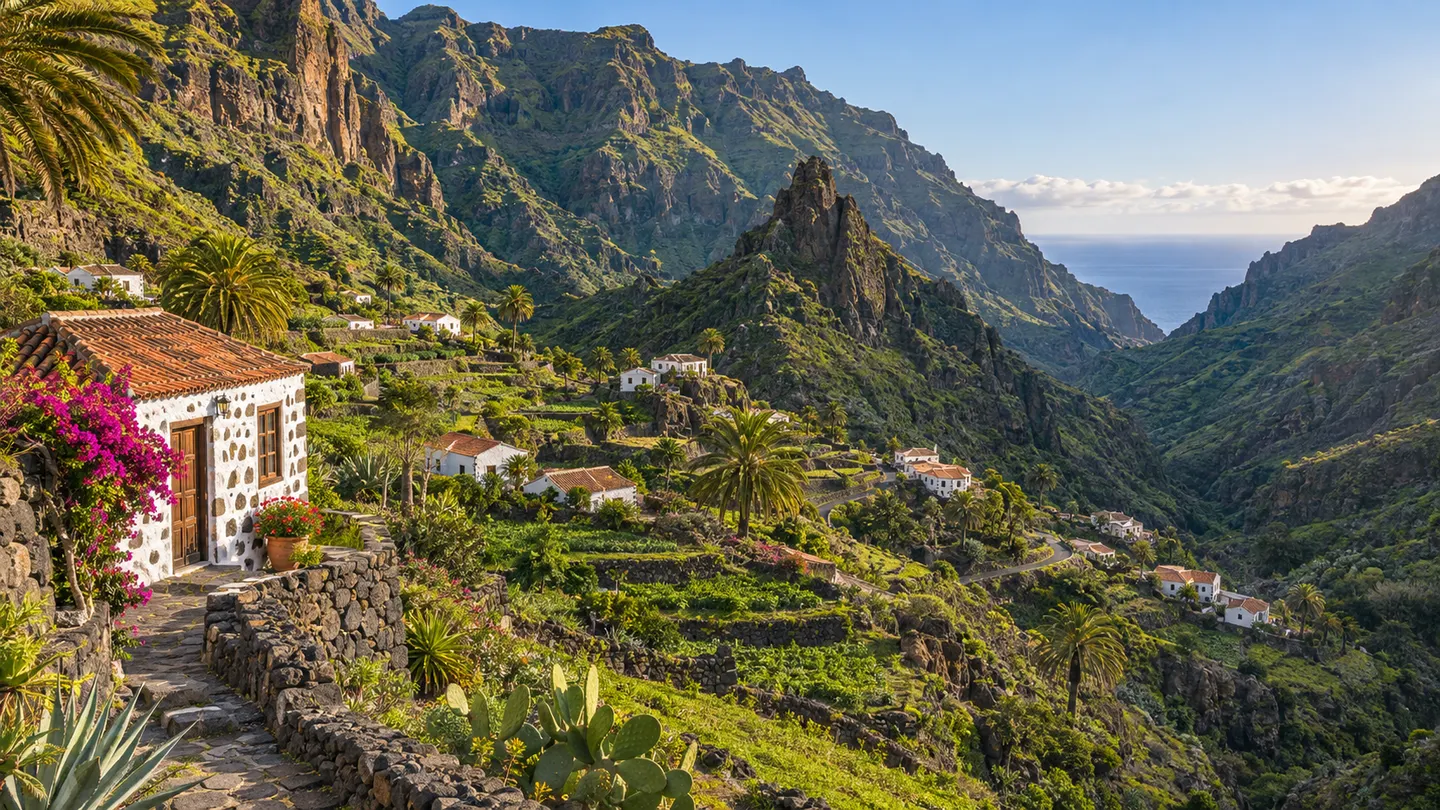
Instead of returning south, you can descend towards the north if you have arranged a new base. Not every place to stay permits check-in at any time of day; make sure you understand the arrival arrangements before setting out on this stage.
Day 5. Garachico and the north-west lava coast
Garachico is a reminder of the relationship between Tenerife's settlements and its volcanic activity. An eruption in the early eighteenth century transformed much of its original harbour. Lava formations can be seen along today's shoreline, where natural swimming pools developed. The old town invites you to wander among its traditional houses and squares without walking particularly far.
The El Caletón pools are one of the town's most familiar sights, but a visit should not depend on swimming. In the case of swell, closures and safety signs always take precedence. Atlantic waves can suddenly wash over areas that looked dry. A circuit of the town and stops at designated viewing places offer another way of appreciating the shoreline.
Those with time to spare could call in at Icod de los Vinos, remembering that the return journey to your accommodation may take longer than the map suggests.
Day 6. Walking in Anaga
The Anaga massif occupies the north-eastern tip of the island and has landscapes of ridges, ravines and humid vegetation. At Cruz del Carmen, depending on access and which paths are open, you may find forest walks which allow you to appreciate the plants and mist characteristic of the higher elevations. Certain natural areas have limits on numbers, permit requirements or access restrictions. Do not enter without meeting those requirements.
Moisture changes the difficulty of a path. A wet rock or tree root can be far more slippery than it looks. You need footwear with appropriate grip and protection from the rain. Trails with major changes in elevation are not suitable for everybody. It can be more enjoyable to arrange two short walks rather than a single long, tiring itinerary.
The historic streets of La Laguna offer a pleasant way to complete the visit, get something to drink and relax before heading back to your accommodation.
Day 7. A final morning without a strict timetable
The last stage could be spent in Puerto de la Cruz. The urban landscape beside the ocean, dark sand beaches and footpaths allow you to make up a simple walk. If your accommodation is in a different area, spend the morning visiting somewhere close by. It makes no sense to risk a long return journey just before catching a plane.
Dedicate a little time to drying equipment thoroughly for the journey home. Wet clothes covered in salt can be rather unpleasant the next day. If there is another night to spend on the island, the afternoon can provide an opportunity to revisit something postponed by wind or rain, provided there is no need to take unnecessary risks in the process.
A week is enough to get a first impression of some very different Tenerife landscapes. The holiday will be more complete if it is not measured by the number of places crossed off a list. Learning to paddle, seeing a forest wrapped in cloud and spending time in a village of maritime origins are three fine memories to take home from a single island.
Explore next: Where to stay in Tenerife for active holidays.