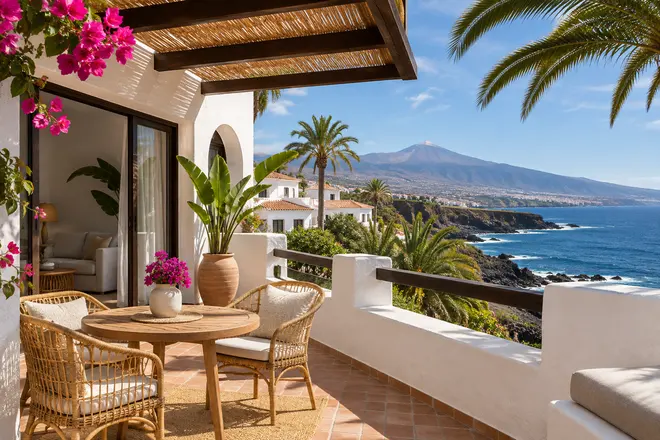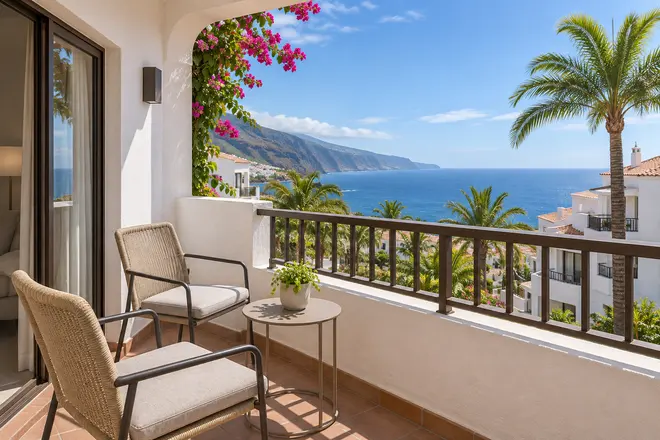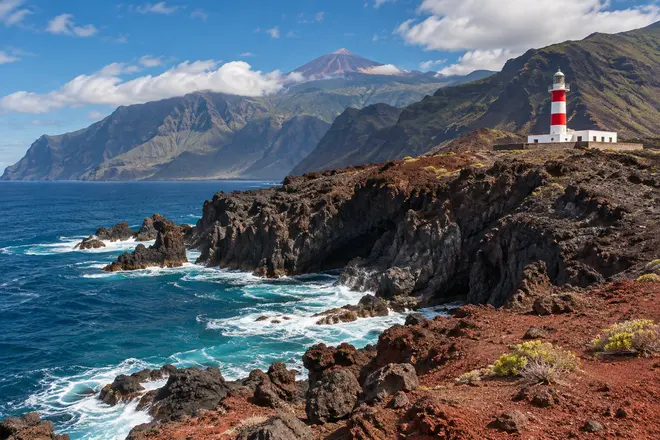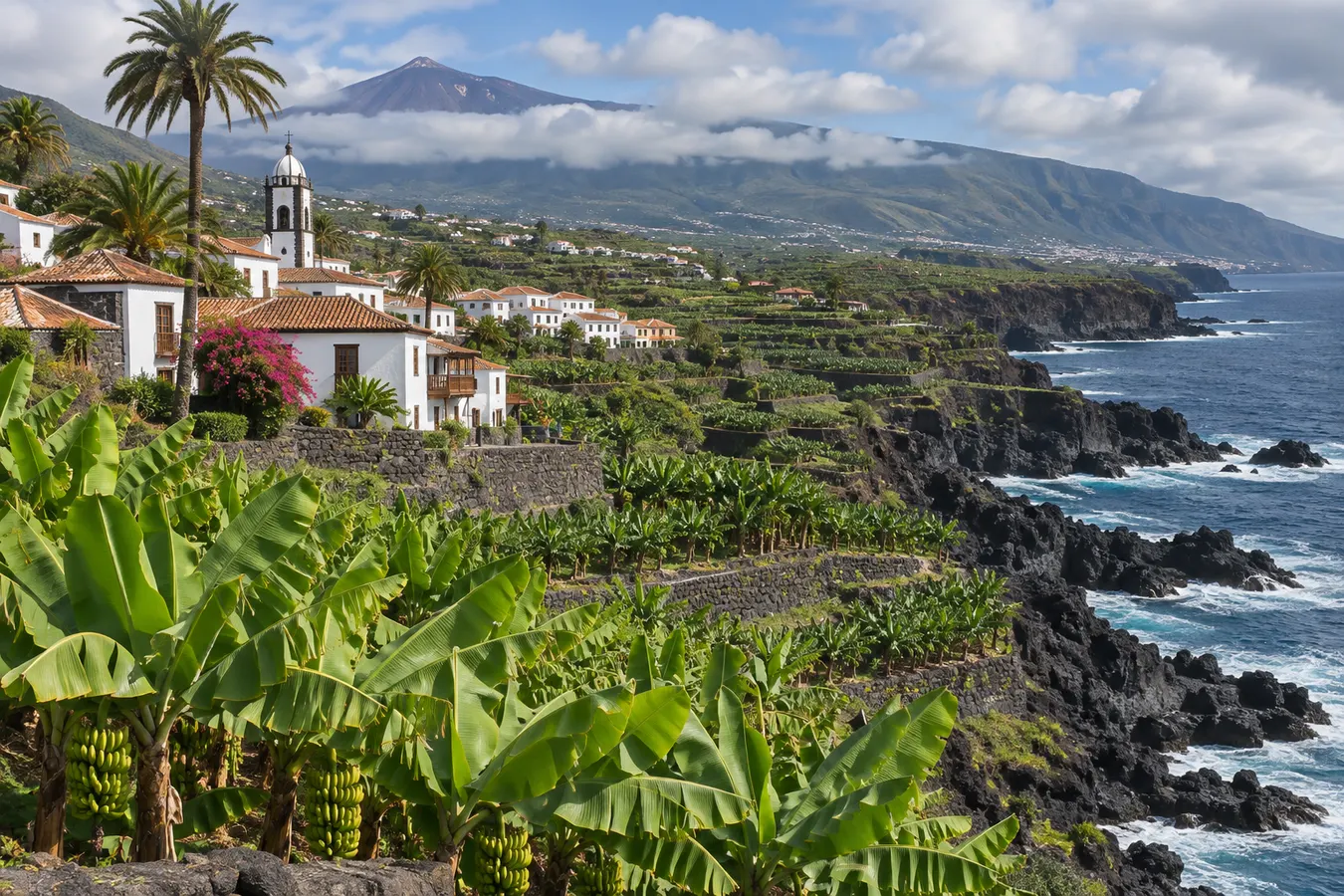
On the island of Tenerife, choosing where to stay means deciding which landscape frames the beginning and end of your days. The southern coast has an abundance of promenades beside sandy beaches and buildings dedicated to tourism. From some places to stay in the north you can see the vegetation growing in the ravines, the roofs of old houses and the ocean beyond. What makes the difference between these two settings so interesting is that both belong to the same island. There is consequently no universal answer to the question of which area is best.
It is more useful to compare four things: the climate you are looking for, the activities you have in mind, the means of travelling and the atmosphere in which you would like to spend your afternoons. Tenerife also has settlements in the east and west which do not fit neatly into the conventional division between north and south.
Climate as a starting point
The northern part of the island experiences the influence of the trade winds and clouds which form at intermediate altitudes against the hillsides. Humidity contributes to the development of the forests and crops which distinguish this area. The southern coast tends to be drier and sunnier, with a very different-looking landscape. This does not mean that it always rains in the north or that good weather is guaranteed in the south. Each area has further variations within it.
Elevation often has an effect which is more noticeable than the direction a place faces. It could be misleading to compare somewhere in San Cristóbal de La Laguna with a property beside the beach in Puerto de la Cruz and treat them as equivalent because both are in the north. In the cooler months, people dreaming of a stay in a country house should pay attention to heating facilities, protection from damp and the direction its terrace faces. In the south, ventilation and the availability of shade during the warmest hours are worthwhile considerations.
Selecting accommodation purely on the average annual temperature ignores details of the real experience of travelling. For a keen walker it can be pleasant to have some cloud over a path which at other times of year is exposed to the sun. Someone who likes to eat breakfast outside may value the stability of temperatures in a quite different way.
If you want to spend several days on the ocean
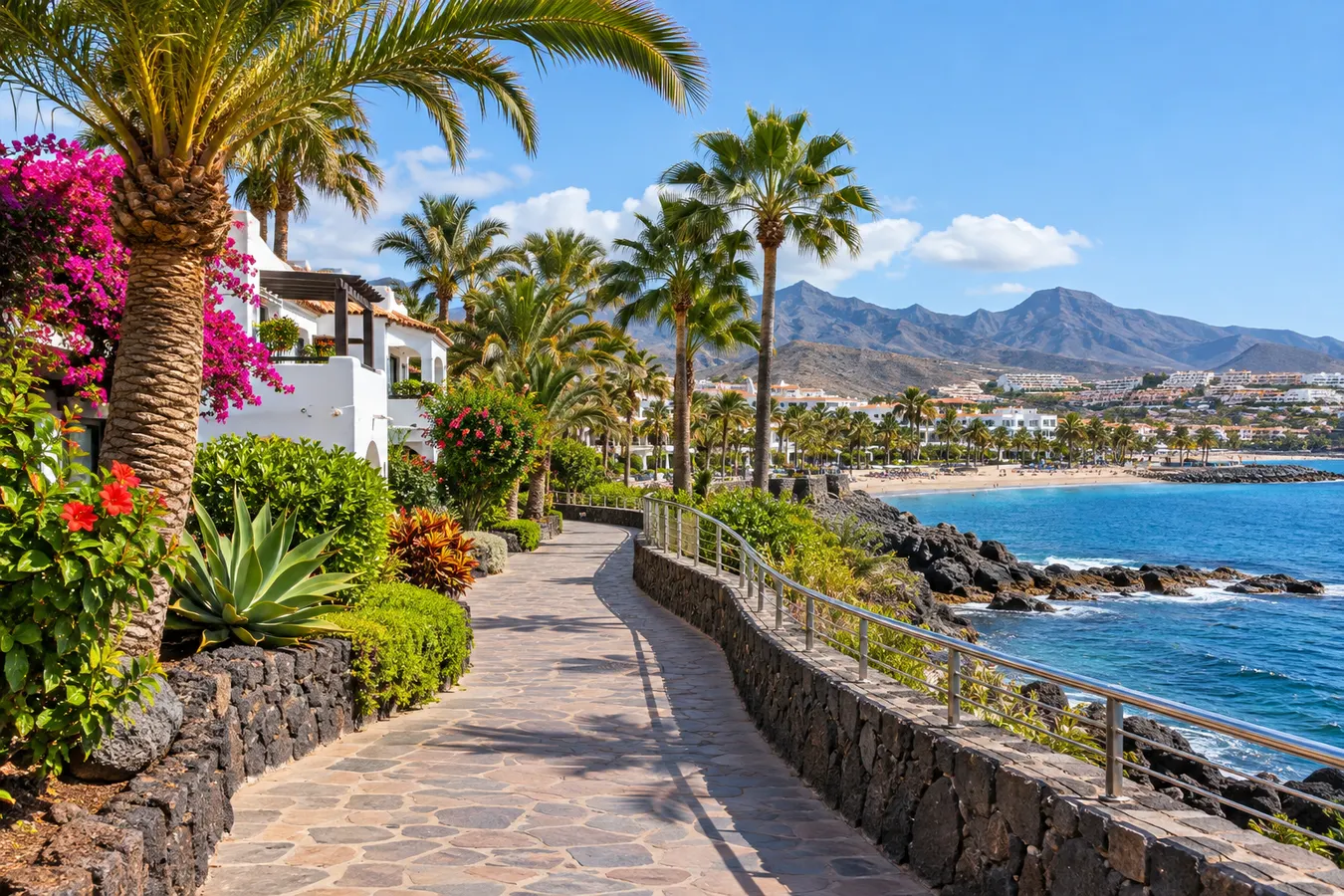
The main resorts in the south, in the municipalities of Arona and Adeje, are well suited to a holiday which involves frequent activities at sea. Los Cristianos has busy streets, two nearby beaches and an atmosphere focused around the harbour. Farther west, Costa Adeje has beaches, accommodation in several categories and pedestrian routes linking many parts of its shoreline. It is possible to combine an organised kayaking session in the morning with an afternoon that involves little travelling.
This is especially useful for couples or families with different interests. If one person wants to paddle and another prefers to remain on land, they can meet again for lunch without having to organise complicated journeys. The west, around Los Gigantes, is another option for anyone who wants the Atlantic to occupy a central part of their holiday. Its cliffs and steep slopes create a very different impression from that of the southern resorts.
Related reading: Where to stay in Tenerife for a kayaking holiday.
Northern beaches are equally deserving of a visit for their volcanic sand and dramatic landscapes. Many of them, however, are exposed to Atlantic waves. Not all are suitable locations for snorkelling or launching a small boat. The conditions at each beach must be assessed on the day, and choosing between north and south is not sufficient to determine what will be safe.
For walking and exploring towns
People who appreciate humid forests, historic streets and the topography of the interior will have plenty of options in the north. Puerto de la Cruz is a coastal base with an urban atmosphere. Not far away lies the La Orotava valley, with agricultural landscapes and settlements on steep hillsides. Icod de los Vinos and Garachico offer another view of the north-western coast, where volcanic terrain forms a visible part of the towns themselves.
For visiting Anaga, staying in the La Laguna or Santa Cruz area reduces the amount of travel compared with making daily journeys from the southern coast. The road network through the massif is winding and some routes require permissions or are affected by access restrictions. Accommodation nearby makes it easier to change the order of your visits in the event of low clouds or disruptions, without having to abandon the entire day.
The south is not lacking in walking opportunities either. Vilaflor, the landscapes around Montaña Roja and the paths beside the ocean show different aspects of the territory. The absence of trees on certain trails can increase your sensation of heat, so it is important to choose your route and timing carefully. Both sides of Tenerife lend themselves to active holidays, with different objectives and conditions.
Where is travel without a car easier?
In the south-west there is a succession of resort areas between which you can walk or use public transport. For someone who wants to limit journeys, Los Cristianos or Costa Adeje could be good choices. That does not mean that every accommodation advertised under those names is near a beach. There are residential developments inland and buildings separated from the seafront by pronounced slopes.
In the north, Puerto de la Cruz has transport connections to other towns and a wide range of services. La Laguna is appealing for combining urban transport, trips to certain villages and cultural activities. Santa Cruz has a more urban character and can work as a base for visiting the north-east. Investigate each planned outing: a reasonable frequency of buses between towns does not guarantee that you can get from your accommodation to any walking trail and back in the same day.
On short visits, it is worth choosing accommodation after deciding on your two main excursions. The difference between crossing the island once and making the same journey several times can be considerably greater than anticipated. Road distances in kilometres do not always reflect the bends, uphill sections and regular traffic delays.
Hotels, apartments and country houses
In the south, it is easy to find large complexes with swimming pools, restaurants and leisure spaces. They are a good option when part of the holiday will be spent using the facilities. Someone setting out on excursions every day may feel more comfortable in a simple apartment with a kitchen and the freedom to prepare something to eat outside regular mealtimes.
In the north and the interior, properties in traditional houses and rural locations are available. The peaceful surroundings have some implications: check the distance to the supermarket, vehicle access and alternative transport. A house on a hillside with a beautiful view may actually be far from the beach even though you can see the Atlantic. The precise location matters more than the category of property.
Splitting your nights between two areas
People coming for a week or longer need not resolve the question with a single word. You can split the trip into two parts and dedicate each one to activities in the surrounding area. One possible approach is to start in the south for kayaking and allow an additional day in case the weather prevents an outing, then move north to explore towns and walk in Anaga. The order can also be reversed, depending on flight times and your arrival airport.
The best location is the one where more of your plans can be realised without long daily journeys. To decide between north and south, make a short list of what you would like to do, work out where each activity can take place and set aside a little time without any specific plans. The contrasts of the island are considerably more interesting when you have time to look at them up close.
Explore next: Where to stay in Tenerife for active holidays.