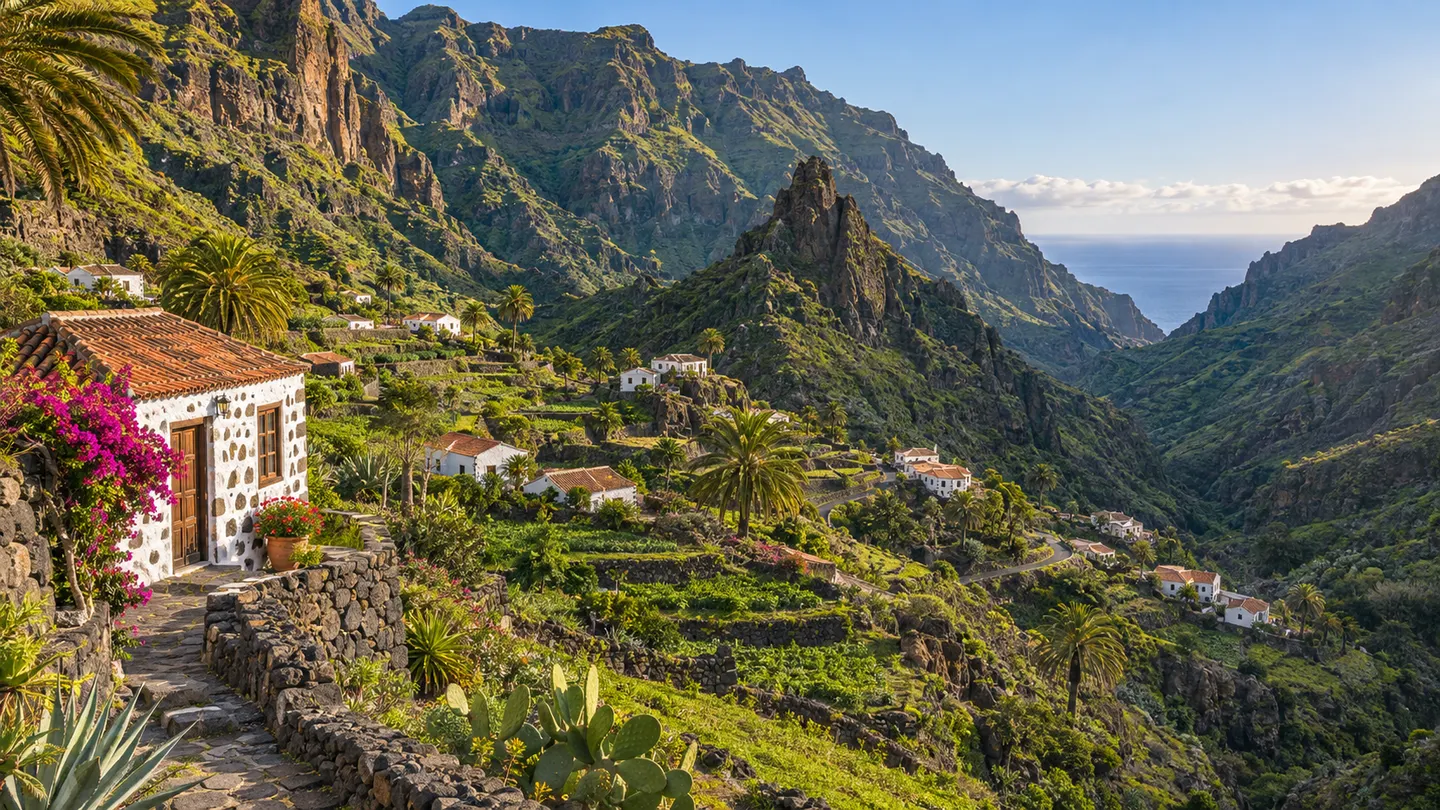
From the heights of Cherfe, on the road to Masca from Santiago del Teide, you can see a collection of houses stretched along a ridge between two deep ravines. The scale of the place is disorientating: to one side lie the mountains of Teno; to the other, the slope falls towards a gorge. The settlement occupies very little land compared with the vast expanse of rock surrounding it.
Masca belongs to the municipality of Buenavista del Norte and lies within Teno Rural Park. The historic settlement is worth visiting in its own right, situated as it is within one of the most rugged landscapes in Tenerife. You can explore the village without doing the famous walk down to the sea, and that distinction is important when preparing an excursion.
A village built with what the mountain provided
Masca’s isolation has shaped both its layout and its architecture. Among the traditional houses you will see stone walls, tiled roofs and small terraces supported on the sloping ground. Separate clusters of buildings occupy areas of the hillside where construction is possible without moving too far from cultivable land.
Take a close look at the details in the walls. The use of volcanic stone, wood and other locally available materials illustrates a way of building adapted to the conditions of the location. Not all the houses retain exactly the same appearance, but the settlement preserves features that help explain how previous generations lived.
The village’s small church is another landmark in an inhabited area whose dimensions are very different to those of the large urban centres on the coast. Paths are short in horizontal distance but follow slopes; houses and squares often serve as better points of orientation than distances on a map.
Limited physical space makes the number of visitors particularly noticeable. When walking around the settlement, respect the privacy of homes and avoid obstructing entrances while taking pictures. A beautiful courtyard visible from the street does not thereby become a visitor attraction.
Getting there from Santiago del Teide or Buenavista
Masca lies between two sides of the mountains that are linked by the Teno road. Approaching from the south, it is worth allowing a first stop in Santiago del Teide; from the north, the drive crosses part of the rural landscape around Buenavista and El Palmar.
There are steep gradients and tight corners in both directions. Distances are small, but journey times have little in common with travelling along a coastal motorway. When banks of fog appear, adapt your driving to the available visibility.
Parking spaces within the village are scarce. Consider authorised public transport, check the timetables and respect any vehicle restrictions in force. Never obstruct the road or stop on a bend to let somebody out or take a picture.
It is also possible to visit the village as part of a broader journey around Teno, but it is not a good idea to combine too many viewpoints. Leaving enough time allows you to take advantage of a designated parking space when one is free and drive without worrying about being late for the next destination.
Related reading: Teno Rural Park: valleys, mountains and Tenerife’s western tip.
Cherfe, Cruz de Hilda and the view into the gorge
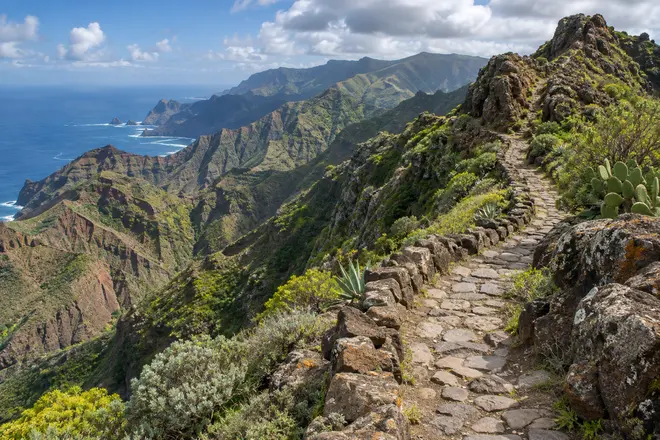
The road provides different perspectives on the valley. From Cherfe viewpoint, you can appreciate the position of Masca within the mountains. The attraction is not confined to the buildings: the steps and ridges of rock and the proximity of formations of different ages also draw the eye.
The area of Cruz de Hilda shows another face of the ancient Teno landscape. The ravines expose rocky profiles that help explain why settlements developed in some areas and not others. Land that looks close in a photograph may be separated by a deep gorge.
The light at different hours transforms these views. At noon, contrasts between sunlit slopes and shaded faces can be particularly strong. Long shadows and changes of colour appear in the afternoon, though the orientation of each slope determines which areas remain illuminated.
These places are sufficient to appreciate the terrain without entering the gorge itself. Use the viewpoints as they are provided; climbing over a barrier or going closer to an edge to remove a branch from a photograph does not improve the experience.
The gorge walk is not a spontaneous stroll
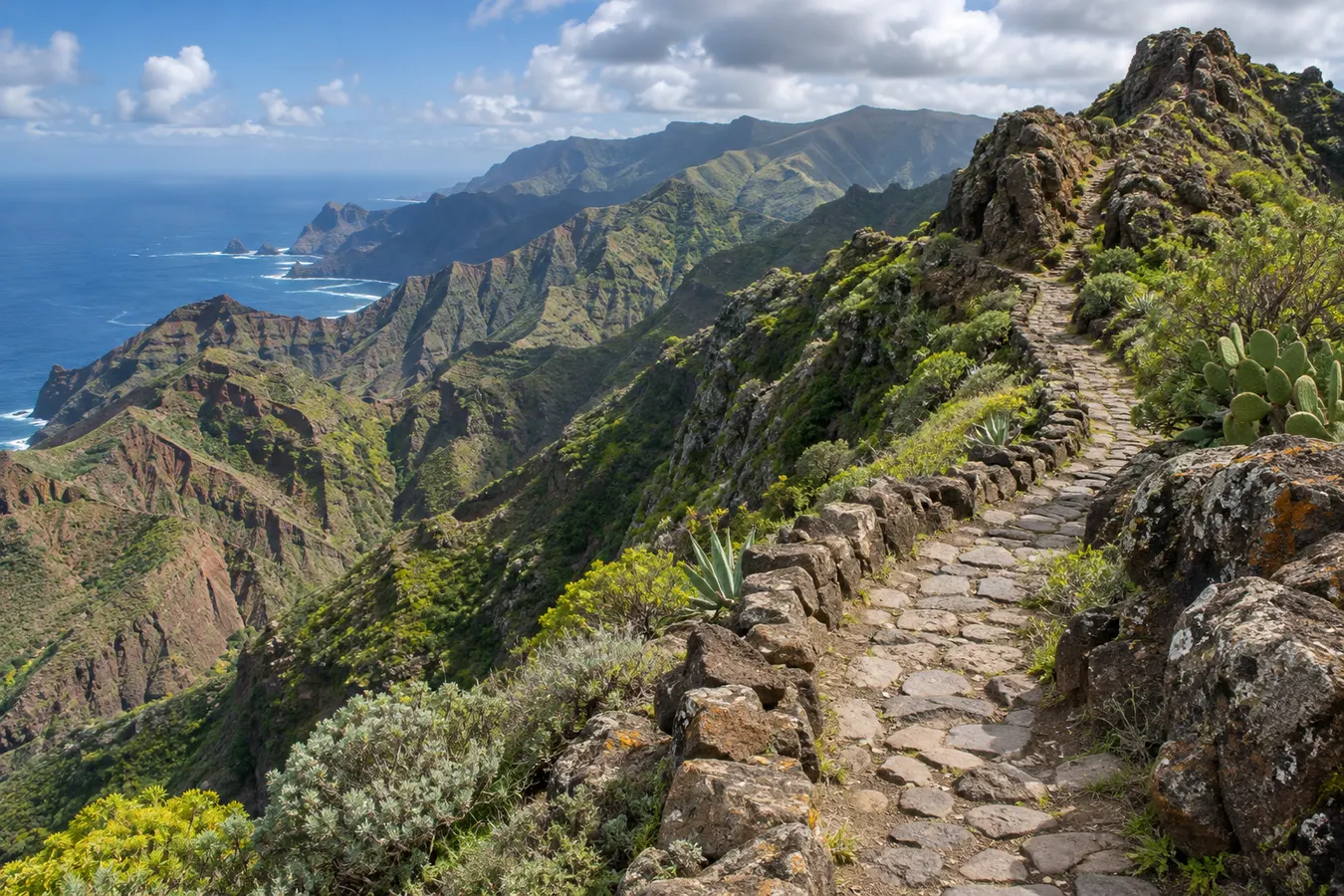
Masca Gorge leads from the village towards the ocean between towering rock walls. The path crosses rocky terrain, with changes in elevation and sections that require concentration. This is a very different activity from walking through the village streets.
Access is regulated. Before making plans, check reservation availability, the conditions of access and the required equipment, as well as arrangements for your return. These measures may change for reasons of safety, maintenance or environmental conservation.
Do not think of the mouth of the gorge as a beach you can depart from by any available means. Sea state affects maritime transport and the use of facilities. Do not assume that you can improvise an embarkation or that swimming will be possible. The authorised arrangements for visiting have specific requirements.
Anyone considering the full route needs to assess their experience on uneven terrain. A lengthy descent is not synonymous with an easy day: feet, knees and muscles bear the strain of walking downhill, and a fall may have serious consequences in an area where access is difficult.
The timetable of a group should reflect the pace of its least experienced member. Leave room in the day for rest and do not allow a transport reservation to become a reason for rushing through rocky sections. This is one occasion where an organised outing with appropriately qualified guidance can be worth considering.
What to look for in the rock formations
The shape of the gorge is the result of prolonged processes. Volcanic layers accumulated as the mountain range formed, and erosion subsequently excavated valleys and steep slopes. Some rock faces contain inclined or vertical bands marking old bodies of volcanic material that cut through existing rocks.
Vegetation takes advantage of cracks and places where moisture collects. It is not uniform: walls facing the sun carry a different selection of plants to the more shaded corners. Their appearance changes with the seasons and rainfall.
One engaging activity for families is to distinguish between natural forms and man-made features. Stone retaining walls, tracks and the edges of fields show how land was occupied; rock strata and deep ravines explain the structure that existed before settlement.
There is no need to touch plants or take stones to do this. Photographs, small sketches and observations in a notebook preserve a memory of the site without altering its features.
Making Masca part of a journey around Tenerife
An early visit to the village leaves the rest of the day available for walking in another area of the rural park or spending time around Santiago del Teide. If you have booked an activity that involves the gorge, it is better for it to be the main plan of the day rather than an extra item between two other destinations.
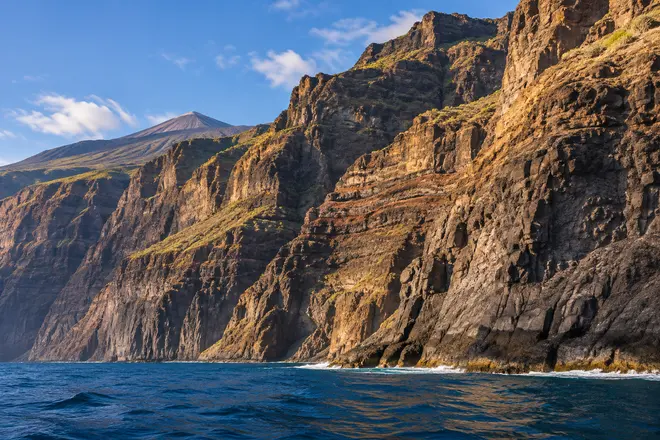
Los Gigantes offers a complementary perspective on the same terrain. From the west coast you can see the seaward face of the ancient mountain range, with ravines opening through it to the water. The relationship between inland formations and the coastal rock wall is easier to understand once you have seen both.
Kayaking excursions following an authorised route appropriate to the sea conditions allow visitors to observe part of the cliffs from a different height. They are not a means of obtaining independent access to the gorge. Each activity has its own arrangements and assessment of the conditions.
Staying in the Isla Baja area means you can visit Masca without driving across the whole island before starting. From the Adeje coast a day out is feasible, though it is worth leaving room for the return journey. Whatever your starting point, Masca becomes much more interesting when it is not reduced to a stop of a few minutes: the scale of the terrain, the architecture and its connection with the ocean each deserve your attention.
Explore next: Kayaking in Los Gigantes.