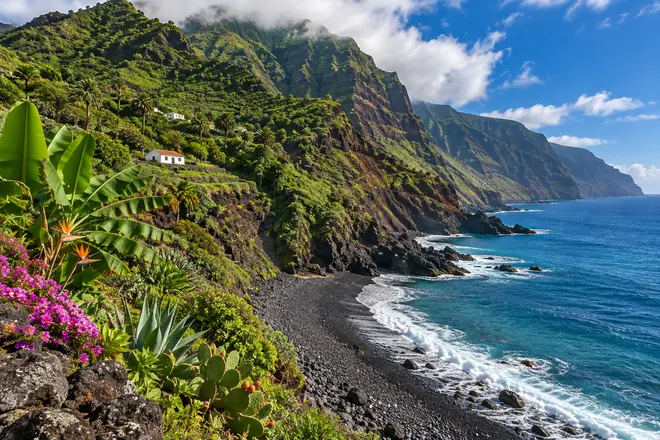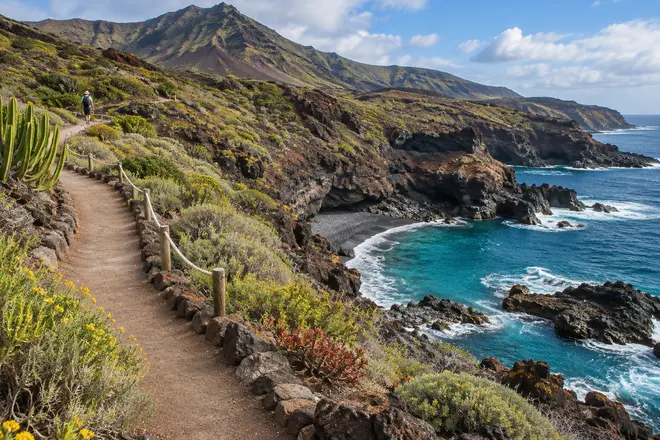
El Hierro offers a way of discovering the Canary Islands that has very little to do with long, sandy beaches. Much of its shoreline consists of cliffs, black lava surfaces and small areas where it is possible to approach the water. This terrain continues under the ocean, so the underwater landscape is particularly important to an understanding of the island.
Marine nature provides plenty of reasons to spend several days in El Hierro, provided you organise your trip with a realistic understanding of its coastline. The name Mar de las Calmas does not mean that every stretch is suitable for swimming or paddling. Marine reserve areas have specific regulations, and the steeply sloping seabeds require knowledge and preparation.
La Restinga and the Mar de las Calmas
La Restinga is a coastal settlement at the southern end of El Hierro. Its harbour reflects two important aspects of life on the island: fishing and activities related to underwater exploration. The volcanic terrain surrounding the town has a particularly dry appearance.
To the west and southwest lies the area known as Mar de las Calmas. The shape of the island provides a degree of shelter from the prevailing northeasterly winds, although it does not eliminate the influence of swell, currents or winds from other directions. The waters around Punta de La Restinga are protected by a marine reserve established in 1996.
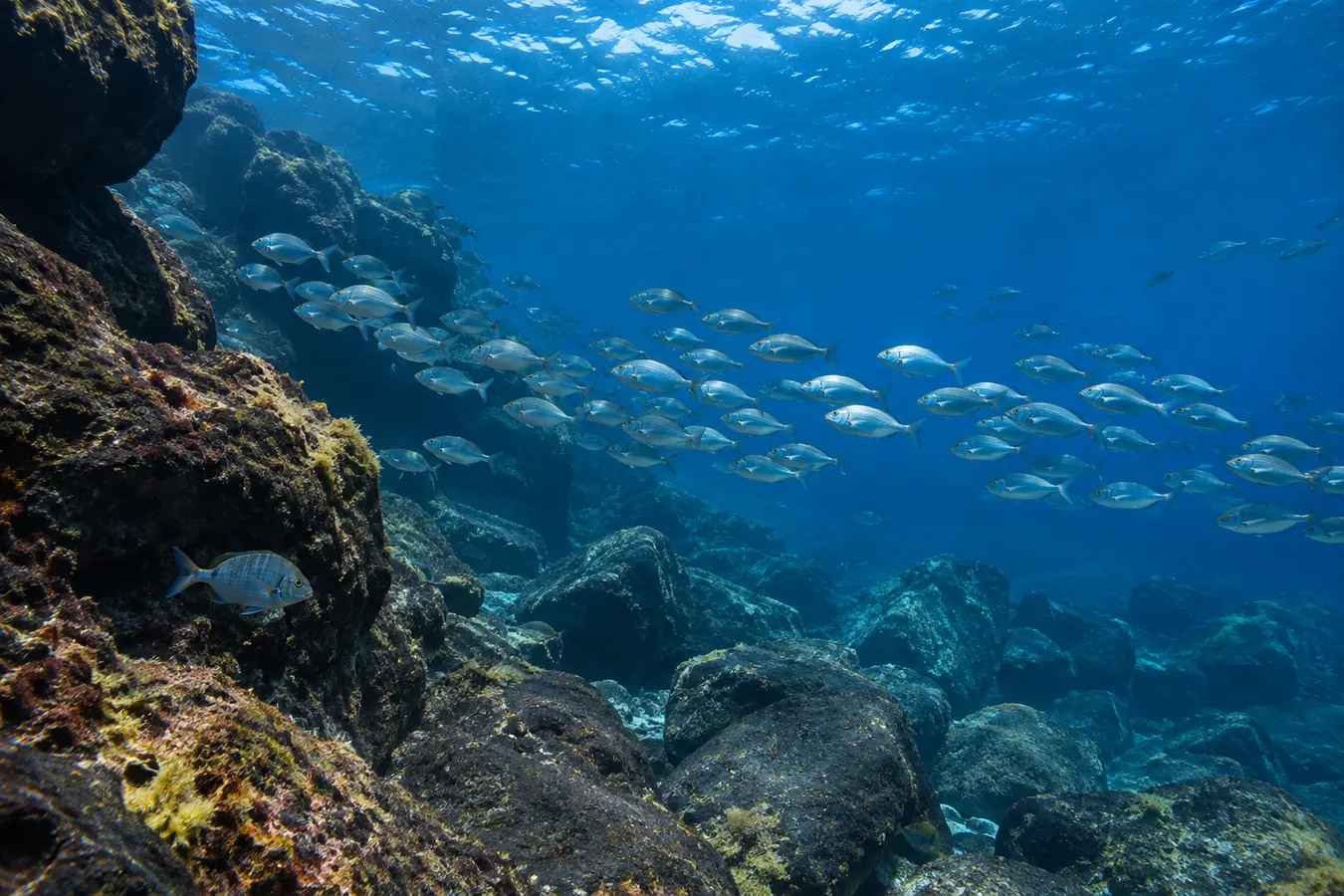
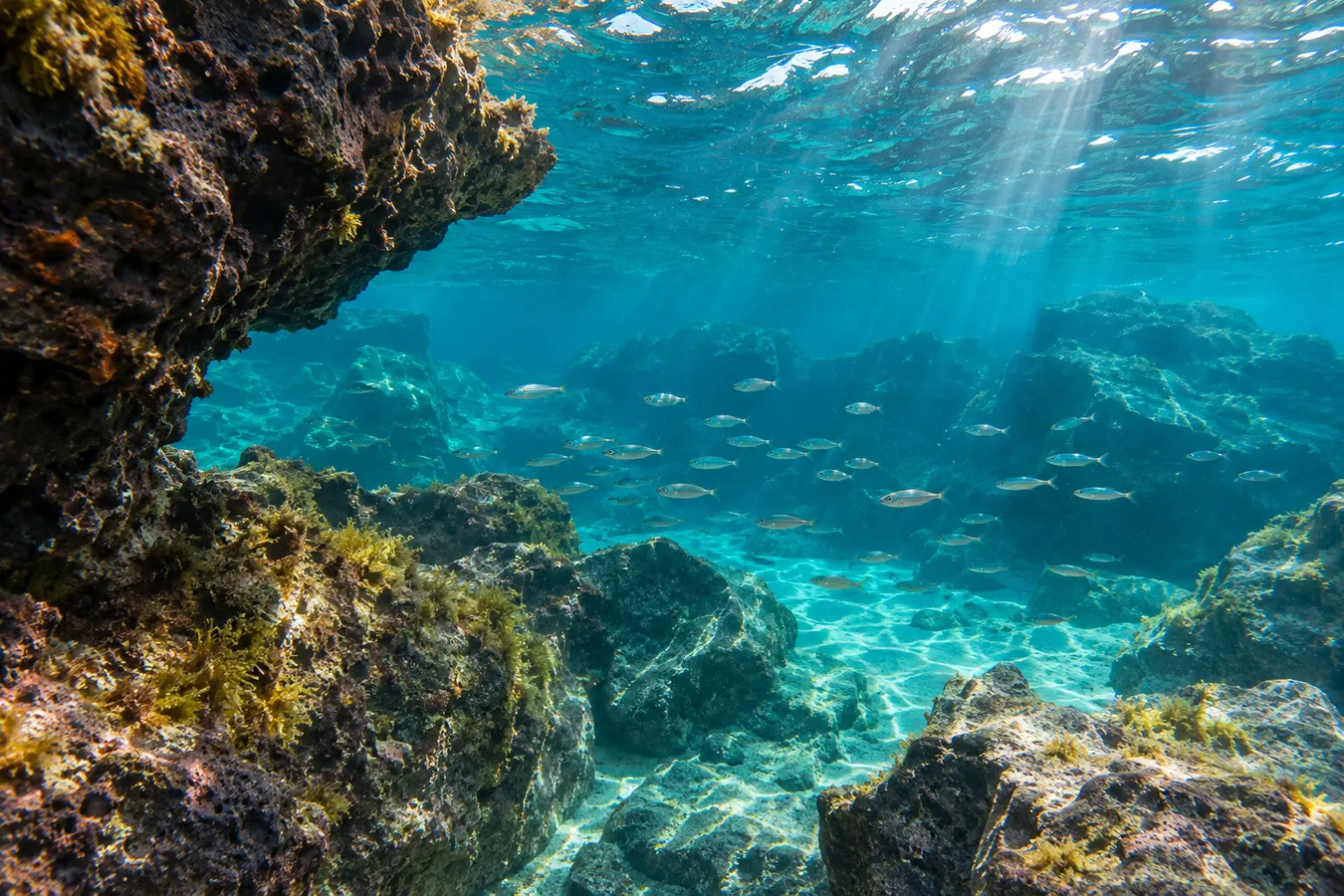
One of the reasons for the biological interest of this area is its combination of waters supporting communities with subtropical affinities and an abruptly changing seabed. Fish find shelter and feeding grounds among the rocky surfaces. Considerable depths can be found within a relatively short distance of the coast.
For someone who only snorkels, learning about these characteristics does not imply attempting to reach a scuba diving site. Dive locations and designated swimming areas are not equivalent. Navigation routes, restrictions within protected areas and the distance to a suitable place to enter the water all need to influence any plans.
Approaching marine life with respect
The seabeds around El Hierro support fish associated with rocky habitats, including parrotfish, comber and a number of species that make use of crevices and cavities. Invertebrates and algae also live there, with their abundance changing according to depth and the nature of each location.
The richness of the marine environment becomes more apparent when you pay attention to small details. Instead of following an animal around, pause in a permitted place and look at the way it moves in relation to the seabed. Some fish move rapidly and others disappear among the rocks. There is no need to touch or feed any of them to make the experience interesting.
Related reading: The natural coast of La Palma: volcanic beaches and sea pools.
The underwater scenery featured in scuba diving photographs generally comes from outings using specialist equipment and training. Do not attempt to reproduce these experiences from the surface or hold your breath in order to enter a cavity. If you want to progress in diving, seek professional instruction and understand the authorisation requirements for the places you intend to visit.
During any wildlife-watching session, respect the signs and designated areas. The marine reserve contains different zones, and not all of them allow the same activities. Leisure activities must adapt to the regulations, not the other way round.
Tamaduste and the eastern coast
The shore near Valverde and the airport presents a very different picture from the south. In Tamaduste, the dark shapes of volcanic rock contrast with white houses and the water of a small inlet. The scale of the place invites a walk with the occasional pause to look at the changing colours of the sea.
This is one of the destinations worth considering when exploring the eastern shore, provided access arrangements and weather conditions permit a visit. An inlet enclosed by rocky walls remains connected to the ocean. Water movements and the state of the tide can alter the ease of getting in and out.
Travellers staying in the east have an alternative here to making the journey to La Restinga every day. The compact size of the island does not eliminate the need to travel along roads with many bends and changes in altitude. A short coastal walk before meeting up for a planned activity can be more rewarding than rushing through a series of destinations.
The natural swimming pools of El Golfo
The El Golfo valley is a defining feature of the island's northern and northwestern geography. The steep slopes surrounding it contrast with the strip of lower-lying terrain closest to the sea. This sector contains some of the most widely known sea pools on El Hierro.
La Maceta comprises several seawater pools of varying depth, adapted among the volcanic surfaces. Charco Azul, also in the El Golfo area, stands out for its relationship to the surrounding rock formations. The approach includes steps, which is important for anyone with mobility difficulties.
Charco de Los Sargos provides another perspective on the coastline. The proximity of some of these places allows visitors to arrange a day devoted to the area's coastal scenery without feeling obliged to swim at every stop. Sometimes the finest experience is to take a seat in a designated area and watch the waves from a safe position.
The pools stand close to the ocean and can be affected by it. Waves may wash over their protective boundaries, and wet surfaces can become slippery. Do not descend to a pool that has been closed because of sea conditions even if the water inside looks calm for a moment. Use open access routes and pay attention to the signs.
Things to do on land when the sea is rough
El Hierro has viewpoints that allow visitors to appreciate the broad geography of El Golfo and observe the coastline from a much greater height. The outline of the valley and the succession of cultivated terraces are particularly interesting when you compare views from above with those at sea level.
The interior has wooded areas and landscapes at higher elevations where temperatures and humidity can differ substantially from conditions in La Restinga. For walking, carry water, suitable shoes and an insulating layer. Check the condition of the trails and choose itineraries according to your level of fitness.
Do not reserve every land excursion for your final day. Keeping the programme flexible means that you can spend an afternoon in the mountains when conditions permit and move a water activity to a day when the marine forecast is more favourable.
Choose a base and decide how long to spend on the island
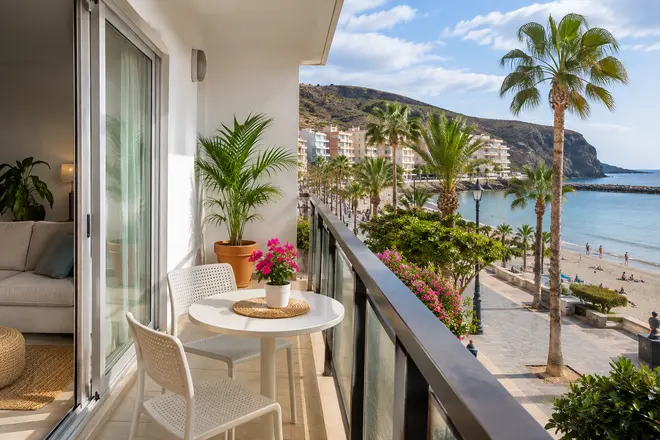
If the seabed is the focus of your trip, La Restinga makes a logical base for exploring the south and organising specialist activities. For the El Golfo valley and its pools, the area around Frontera offers a practical location. On the eastern side of the island, the surroundings of Valverde provide access to the coast and facilitate arrangements connected with the airport.
For a short holiday, stay in one location and establish your priorities. With five or six days available, spending several days in the south and others in the north reveals contrasts that are easily missed during a hurried visit.
Always consult the marine forecast and establish the actual availability of access points and organised activities. Sea kayaking requires appropriate equipment, an assessment of conditions and companions; for anyone who lacks experience, professional help is fundamental. El Hierro invites visitors to approach the ocean by observing and learning about its landscapes, without any need to hurry into the water.
Explore next: Where to stay in Tenerife for active holidays.