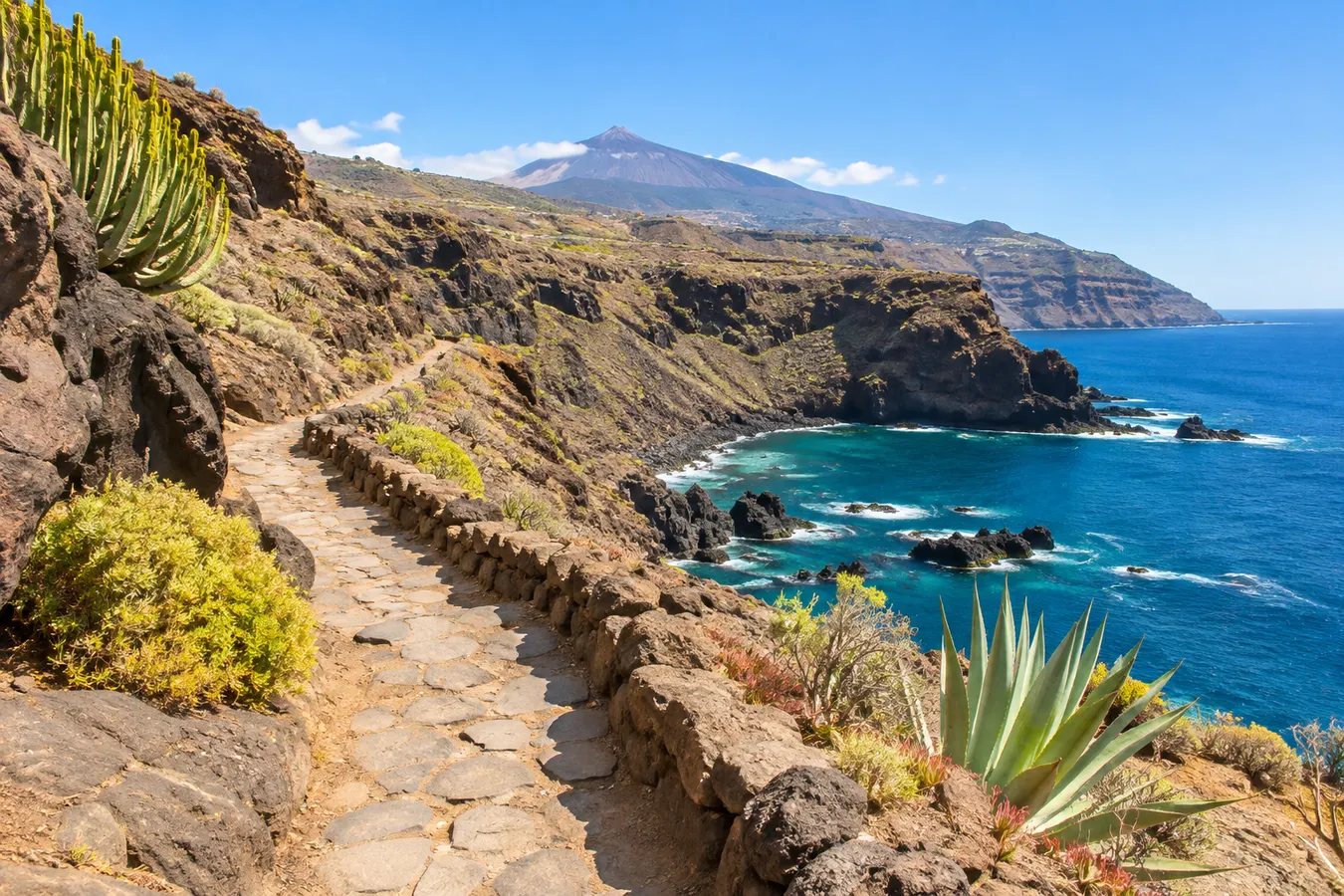
The coast of Tenerife offers a rather different style of walking from the routes leading towards the mountain summits. The volcanic terrain lies at a lower elevation, but does not necessarily involve fewer slopes or less exposure. In some municipalities you will find extensive public promenades where comfortable shoes and a couple of hours are all you need. Other routes pass through natural areas requiring preparation, a check on the condition of the path and, on occasion, an access reservation. The choice depends both on the landscape you would like to explore and the abilities of your companions. Walking a considerable number of kilometres need not be the object of a day beside the sea: taking time over one section may be much more rewarding than combining several routes.
From Los Cristianos to the seafront of Arona and Adeje
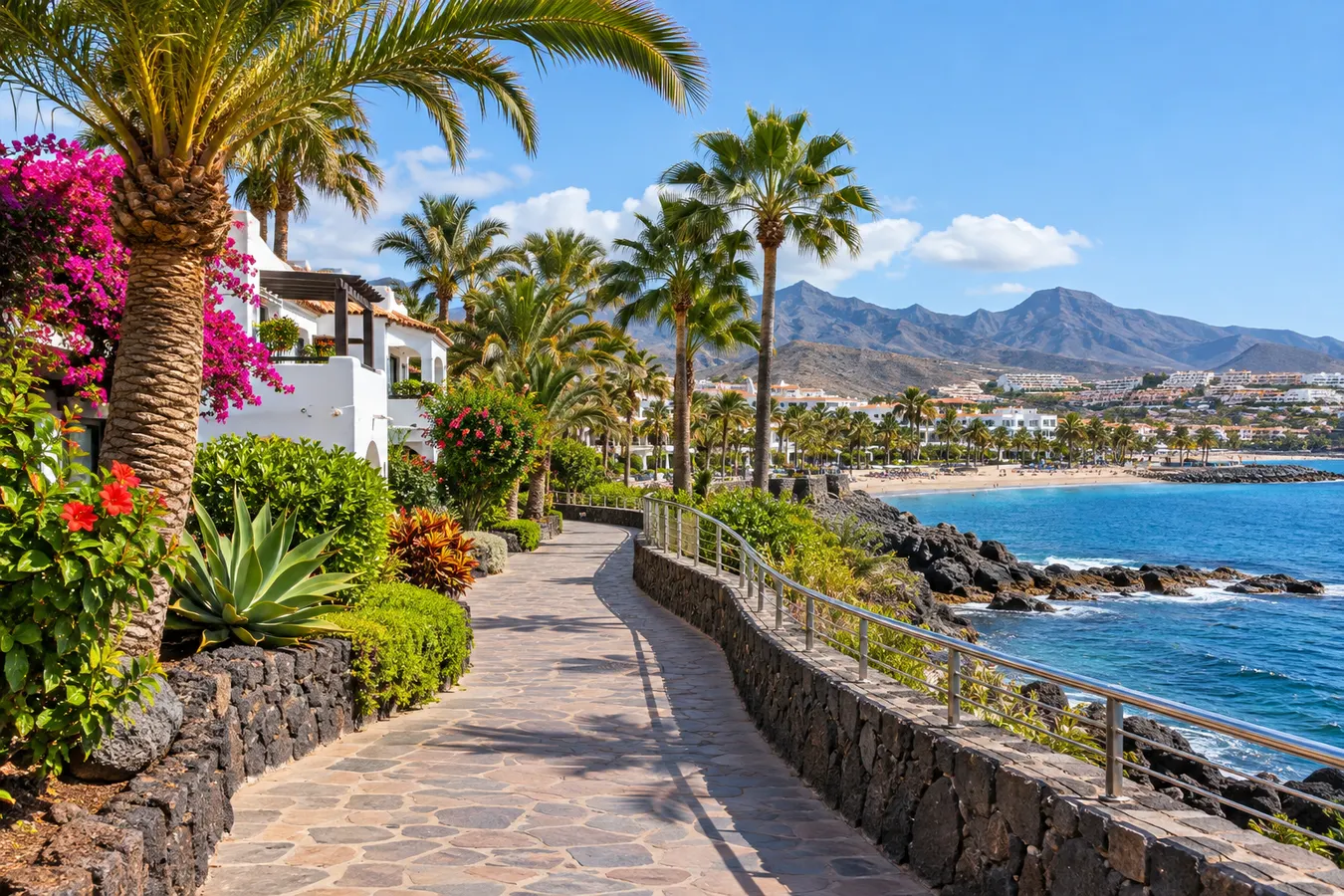
Los Cristianos has an urban centre with streets close to its harbour. From here, public routes beside the sea connect beach areas and the resort districts of Arona and Adeje. For a first morning in the south, it is practical to choose a section that allows you to return whenever you have walked sufficiently far. Las Vistas beach is a recognisable place to begin. Further west, the shore of Playa de las Américas features rocky stretches, beaches and developed waterfront areas. The transition makes it clear that the coast has a variety of different characteristics even in the most developed districts. It is worth looking out to sea as well as watching the continual activity along the promenade.
The advantage of these walks is that there are numerous places to rest, buy water or move away from the shoreline via streets further inland. The paths are not always level with the sea and there may be occasional differences in elevation; anyone needing accessible routes should look beforehand for step-free sections along their chosen itinerary. The actual distance increases if you make detours to approach every beach. There is no need to turn the outing into one uninterrupted journey as far as Costa Adeje. You could split the seafront into two mornings instead and explore the surroundings of each section in greater detail.
Between Torviscas and El Duque, for instance, the route passes Fañabé and gradually enters another part of the shoreline. Continuing towards La Caleta gives you an impression of the scale of a smaller coastal village. These are popular walking areas where considerable numbers of pedestrians need to share the space, so it is preferable to do exercise when the seafront is less crowded. A moderate walk in the morning is an enjoyable way to keep your legs moving between kayaking sessions, particularly if you are staying nearby and do not want to drive shortly after doing other strenuous exercise.
Malpaís de Güímar, lava beside the ocean
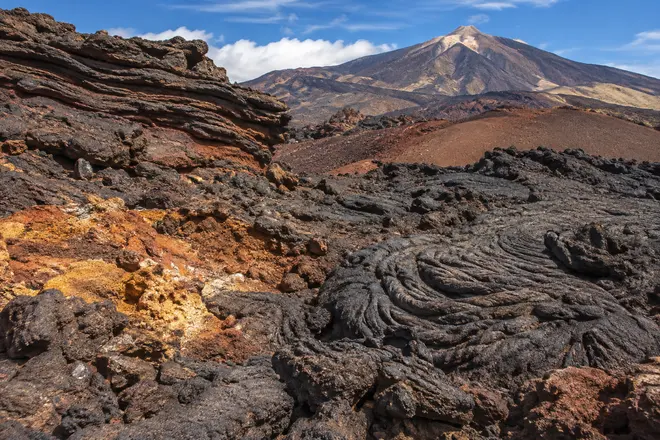
On the eastern coast, the Malpaís de Güímar provides an opportunity to experience an area where volcanic terrain extends over a wide area without a continuous strip of urban development. One established itinerary starts from El Puertito de Güímar and describes a circuit of around six kilometres through the natural reserve. The distance might appear modest to a regular walker, but the variable surfaces and scarcity of shade make a difference to how much effort is involved. Check the planned route and its alternatives before setting out, particularly if restrictions have been introduced because of heat, maintenance or conservation requirements. Use only the permitted footpaths.
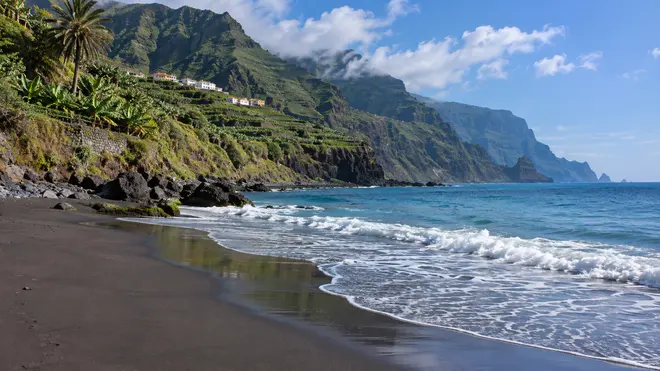
Related reading: Black-sand beaches in Tenerife: landscapes of the north.
Much of the interest of the route lies in the transitions between different forms of terrain. The lava takes on irregular shapes, in places appearing beside looser materials and leaving gaps in which plants adapted to dry conditions are established. Close to the sea, the appearance of the ground changes and you can see the effects of salt and wind. There is no need to leave the trail to appreciate these differences. Looking from the path helps to avoid damaging the vegetation along its edges and ensures that volcanic materials are left undisturbed. Remember that the protected area extends far beyond what you can see on a journey close to the shoreline.
There are connections with other routes in the surroundings of the Malpaís and the village of El Socorro. Not all the alternatives have the same length or provide a way of returning to your starting point without transport. Before setting out, choose a specific route and establish the return arrangements, rather than making decisions along the way without knowing the condition of the paths. Bring enough drinking water for the whole outing, sun protection, a map available offline and shoes that protect your feet. Walking across lava is not the same thing as following the paved seafront of Los Cristianos. Weather conditions might make a shorter outing into the village a more suitable choice than a hike through the reserve.
Rambla de Castro: palms and the history of cultivated land
In Los Realejos, the protected landscape of Rambla de Castro shows a very different relationship between the sea and the land further inland. From the sections of path open to visitors, you can distinguish native palms and other coastal plants as well as features associated with periods of agricultural activity and the use of water. The Hacienda de Castro, Fortín de San Fernando and former water pumping works at Gordejuela are among the historic features of the area. Not every structure is open for people to go inside. Part of the appeal lies in observing their positions relative to the slopes and the land to which the water was distributed.
The landscape has considerable differences in elevation and access requirements may apply to paths here, so check availability and whether any type of reservation is necessary before travelling. The fact that a building or beach looks close does not mean that you can make your way freely towards it. Closed paths and abandoned structures are not alternatives for reaching your destination. After a day on an urban beach in the south, walking the authorised trails of Rambla de Castro provides an opportunity to pay closer attention to the structure of the terrain and the history of its uses. Allow plenty of time for this and do not hurry to finish before a separate activity elsewhere.
Bajamar and Punta del Hidalgo: a coast to take your time over
The seafronts of Bajamar and Punta del Hidalgo offer a way of getting to know the marine landscape of the north-east without undertaking every walking route in the Anaga mountains. These coastal settlements have public waterfront areas, natural bathing pools and views of a shoreline strongly defined by volcanic rock. Each village can be visited quite independently. Consider your arrangements in advance for moving between them, as a route that seems to follow the coast is not necessarily the most practical pedestrian link. During rough weather, seafront areas near breaking waves can be inappropriate places to walk. Pay attention to any closures.
The urban walks allow you to see the relationship between the coast, the houses and the spaces used by local residents every day. For anyone carrying a camera, the lighthouse of Punta del Hidalgo and the Anaga mountains offer recognisable features around which to compose a picture. Keep to public spaces and do not try to find a different angle by approaching lava shelves where waves are breaking. This part of Tenerife has much of interest to observe from solid land; being able to go swimming is not a requirement for appreciating the force of the Atlantic along the northern coast.
Preparing an itinerary on foot rather than improvising
The first decision is whether to make this an urban stroll or a walk along a natural trail. The former often has numerous options for taking a rest, while for the latter you will need to carry everything essential and organise your return without depending on facilities along the way. Estimated walking times can be affected by stops, temperature and slopes. If your companions have different ages or levels of fitness, select the route according to the needs of the person who requires the most time. Tenerife makes it possible to combine walking and marine activities in a single holiday, but it is worth planning days with different degrees of exertion to enjoy both without feeling that there is too little time.
Explore next: Kayaking and snorkelling in Tenerife.