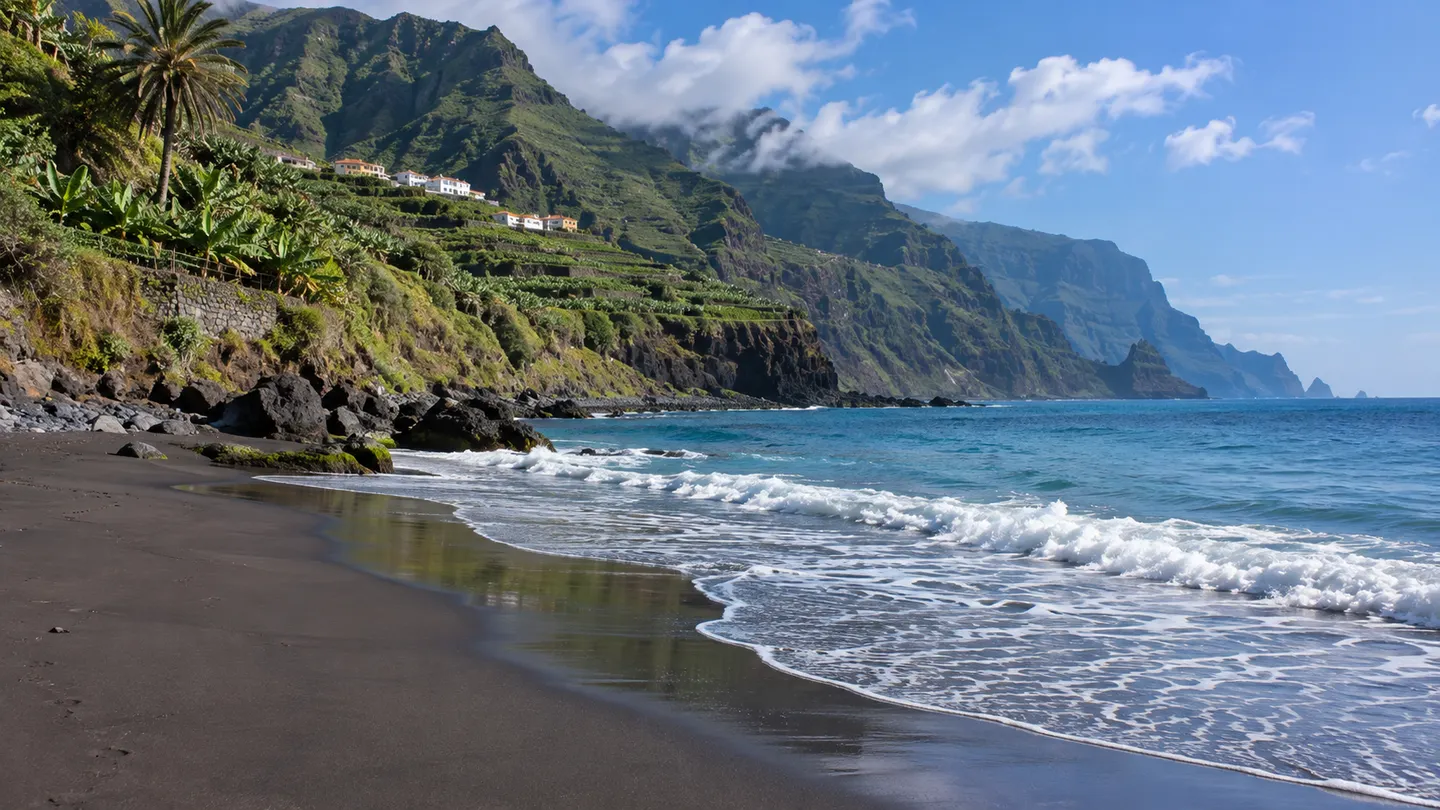
Black sand is one of the most familiar images of Tenerife, but not all the island's volcanic beaches resemble one another. In some places it is fine and dark; in others the sand is mixed with gravel and large rounded stones. The shape of the ravines reaching the shore, the inclination of the land and its exposure to the Atlantic all alter the impression of each beach considerably. In the north, you understand the character of these beaches by looking inland as well. A few metres from where the waves are breaking, there may be steep hillsides covered in vegetation, terraced fields or bare rock. It is worth planning a journey between them with both the kind of landscape you wish to see and the means of access in mind.
Benijo, Almáciga and Roque de las Bodegas
Around Taganana, Benijo beach is renowned for the view of the Anaga rock formations rising from the ocean. These outcrops mean that the horizon is not simply an uninterrupted line. The composition of the scene changes as you move along the beach and when visibility allows you to see the more distant rocks. The usual approach includes a path with steps from above, although you should check that it is open. The place lacks many of the amenities associated with an urban beach. Consider the conditions before descending, since climbing back in the heat with your belongings is more demanding than the approach.
Not far away is Almáciga, another dark-sand beach lying below the hamlet of the same name. You can often appreciate the force of the waves along this stretch of the Anaga mountains. Its appeal does not depend upon whether you are able to go into the water. From the designated visitor areas you can make out the shape of the ravine and the meeting of the mountains with the sea. Taking a little time to observe the landscape enables you to see an important side of Tenerife, without turning an outing along winding roads into a bathing expedition when conditions are unsuitable. On certain days the sensible way to enjoy the coast will be from viewpoints well away from the breaking waves.
Roque de las Bodegas has a waterfront closer to a group of houses and places to eat. The mixture of black sand, gravel and rounded stones adds a different detail to the succession of beaches here. It makes a convenient stopping point for anyone preferring to organise a visit without negotiating more complicated access paths. Do not, however, mistake the proximity of the road and houses for complete protection from the sea. Currents and unexpected waves are considerations throughout this part of the coast. Before approaching the shoreline, pay attention to the warnings and the conditions of access.
El Bollullo and the area of El Rincón
El Bollullo lies in the municipality of La Orotava, in the El Rincón district. The impression made by this beach is quite different from the offshore rocks of Benijo. What strikes you here is the proximity of the volcanic cliff to the sand. The access routes offer a view of part of the historic relationship between the cultivated terraced land and the coast. This combination explains why many people include El Bollullo in a stay in Puerto de la Cruz, even if they have no intention of swimming. If you intend to walk here, make sure you follow permitted routes and take account of notices regarding the condition of the paths.
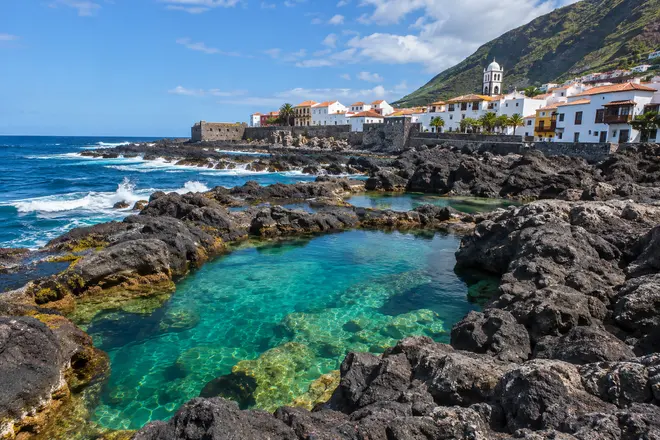
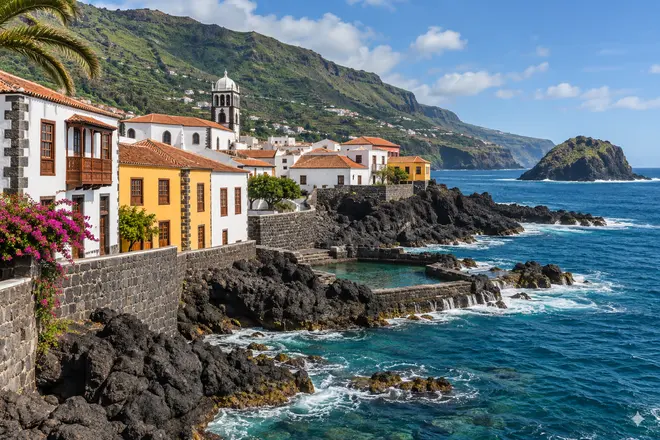
Related reading: Tenerife's natural pools: volcanic rock pools and seawater bathing.
The approach to the beach includes steps and space for parking nearby can be limited. A small backpack with drinking water, a light extra layer and sun protection is considerably more convenient than a trolley full of beach equipment. El Bollullo may experience substantial waves and is not an appropriate setting for learning a water sport without preparation. When access to the sand and remaining there are permitted, the contrast between the dark grains and the white foam provides an interesting subject to appreciate from a safe distance. When this is not possible, change plans before approaching the exposed areas rather than once you are on them.
Puerto de la Cruz and black sand in an urban setting
In Puerto de la Cruz, Playa Jardín shows how a volcanic-sand beach can form part of a landscaped environment incorporating paths, cultivated areas and facilities beside the coast. From this part of town, you can understand the difference between the remote beaches of Anaga and a seafront integrated into an urban street plan. The surroundings make it possible to explore the area even when restrictions on bathing are in place. Before planning an outing with the intention of swimming, establish the current status of the individual sectors and the water. The proximity of some places to stay does not mean a beach will be available for swimming on every date.
The shore of Puerto de la Cruz also helps you notice something else about these dark beaches: the colour of the sand changes when it is dry, wet or underwater. In some places there are fragments of rock and vegetation deposited by the sea. There is no need to take a sample with you to compare the textures. Looking down from the seafront you can see something of the way these materials are distributed. On an unhurried day, a stroll around the town and a look at the coastline offer a convenient alternative for anyone who has spent the previous few days hiking in the mountains or doing water sports in the south-west.
Volcanic sand and the practicalities of a visit
The dark colour is linked to the composition of the volcanic materials that make up the island, broken down and moved by water and other processes of erosion. Yet the story of the sand differs from that of the lava making up a cliff. While certain lava flows retain irregular features associated with their cooling, the grains and pebbles on a beach have undergone further movement and wear. Pausing to look at their various sizes and shapes reveals these differences without any need to understand specialised geological vocabulary. The gaps between stones may also form a refuge for little organisms and should not be disturbed.
One practical feature of black-sand beaches is the temperature the surface can reach on a sunny day. Bring footwear and avoid letting children walk barefoot for a long distance across sand that has become very hot. The different sizes of the grains and stones also affect the comfort of a walk. Walking across more compact sand does not feel the same as making your way along a shore of loose stones. For a visit involving both paths and a beach, choose shoes suitable for the terrestrial parts of the outing. Different beaches around northern Tenerife will present different conditions underfoot.
What to do when the Atlantic is rough
The north and north-east coast frequently experience considerable waves. Even if you have no intention of swimming, remain beyond the reach of the sea and away from slippery surfaces. On some beaches, the amount of sand available changes with both the tide and wave conditions. It is inappropriate to walk off towards isolated corners without considering the permitted exits. If there are closures, weather alerts or a red beach flag, respect the relevant limitations. The notion of a wild beach is no justification for visiting regardless of these conditions.
There are other ways to enjoy the area. In Anaga you could organise a visit to established viewpoints or settlements such as Taganana, provided access is open. Around La Orotava, a cultural stop offers a chance to see buildings in the historic towns. Puerto de la Cruz has urban walks that do not depend on the conditions for entering the sea. Bathing, then, need not become the criterion for judging the black-sand beaches of Tenerife. These are places where the island and the Atlantic display a geological relationship visible to the naked eye. Taking a little time to look carefully, from the permitted visitor areas, can reveal more than a hurried journey taking in ten beaches in a single morning.
Explore next: Kayaking and snorkelling in Tenerife.